The Radical Return to Binding
In a converted Victorian railway arch beneath London Bridge, Zara Mahmood threads her needle with the precision of a surgeon and the conviction of a revolutionary. Each stitch securing the spine of her latest zine—a meditation on Muslim identity in post-Brexit Britain—represents a deliberate rejection of digital convenience in favour of tactile rebellion.
"There's something fundamentally subversive about making people wait," Mahmood explains, her fingers working rhythmically through paper and thread. "In a world of instant everything, the hand-bound zine forces pause, demands attention, insists on being held."
Mahmood belongs to a growing movement of British publishers who have abandoned digital distribution entirely, embracing instead the laborious craft of hand-stitched, small-edition publications. Their workshops—scattered across repurposed industrial spaces from Glasgow to Bristol—represent the vanguard of what theorists are calling the "slow media revolution."
The Economics of Intentionality
The numbers appear to contradict commercial logic. While digital publishing offers unlimited distribution at minimal cost, these artisanal publishers deliberately constrain their reach. Mahmood's latest issue, "Threads of Belonging," comprises just 200 copies, each hand-bound and priced at £12. Production takes three weeks; the edition sells out within days.
"We're not trying to maximise profit," explains Jamie Chen, whose Edinburgh-based collective Peripheral Press specialises in hand-bound poetry chapbooks. "We're creating cultural objects that resist commodification. Each copy is unique, irreplaceable, impossible to pirate or algorithmically distribute."
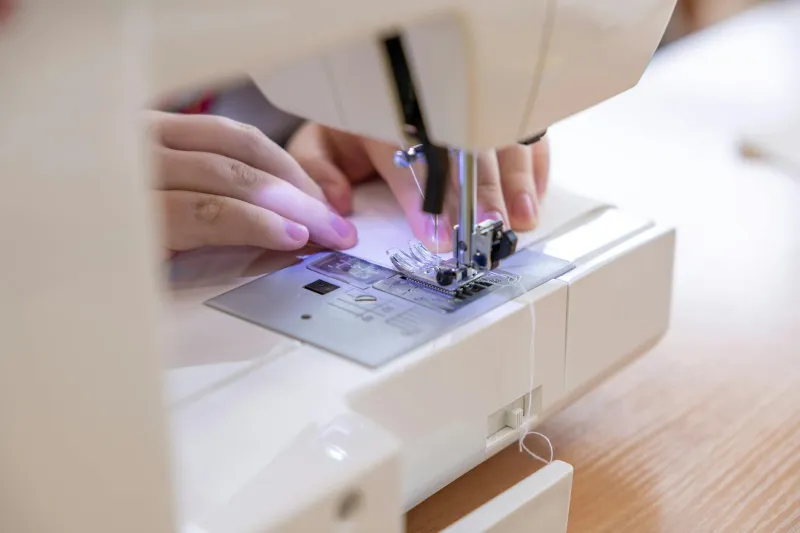
Chen's workshop occupies a former textile factory, its sewing machines repurposed for bookbinding. The irony isn't lost on him—using industrial equipment to create anti-industrial publications. His latest project, "Northern Frequencies," documents Scottish Gaelic poetry through hand-marbled covers and letterpress text, with each copy requiring four hours of binding work.
"The labour is the point," Chen argues. "When someone buys our zines, they're not just purchasing content—they're supporting a practice that explicitly rejects efficiency culture."
The Risograph Renaissance
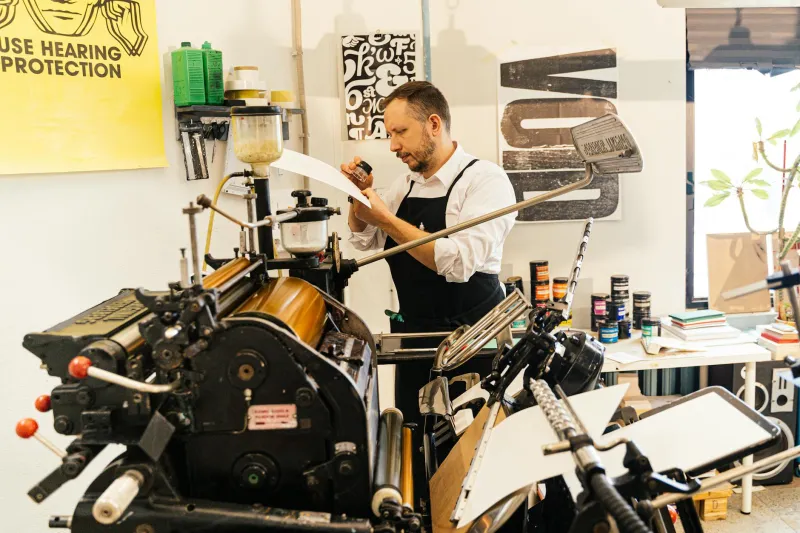
Central to this movement is the risograph—a Japanese printing technology that bridges the gap between photocopying and offset printing. Originally designed for office reproduction, the riso has been embraced by zine makers for its distinctive aesthetic and tactile qualities.
"Risograph printing has this beautiful imperfection," notes Sarah Williams, whose Bristol collective Grain Press operates three vintage riso machines. "The colours shift slightly between copies, the registration isn't perfect, there are texture variations. It's the opposite of digital precision—gloriously human and unpredictable."
Williams' workshop resembles an artist's studio more than a commercial printer. Ink buckets in fluorescent pink, electric blue, and metallic gold line the walls, while test prints showcase the medium's unique colour palette. Her latest publication, "Concrete Dreams," explores brutalist architecture through two-colour riso printing, with hand-folded pages that create unexpected colour interactions.
The riso's limitations become creative opportunities. Its restricted colour palette forces designers toward bold, graphic solutions. The manual feeding process introduces happy accidents. The inability to print large runs naturally creates scarcity and exclusivity.
Mapping the Movement
Across Britain, zine fairs have become pilgrimage sites for this community. The Glasgow Zine Library's quarterly fair attracts hundreds of publishers and thousands of collectors, transforming community centres into temporary marketplaces for experimental publishing.
"These events feel like underground movements," observes Dr. Rebecca Turner, whose research at Goldsmiths examines contemporary print culture. "There's this sense of shared resistance against mainstream publishing and digital dominance. People travel hundreds of miles to buy zines they could theoretically access online."
The geography of British zine making reveals interesting patterns. Glasgow's scene emphasises political content and Scottish identity. London focuses on art and theory. Bristol champions environmental themes. Manchester celebrates working-class narratives. Each regional cluster develops distinct aesthetic and thematic characteristics.
Key Regional Voices:
- Glasgow: Collective Unconscious publishes radical political theory in hand-sewn editions limited to 50 copies
- Manchester: Industrial Echoes documents working-class history through oral history zines with hand-stamped covers
- Bristol: Future Archaeology explores environmental themes using recycled paper and natural dyes
- London: Peripheral Visions showcases experimental poetry in elaborate hand-bound formats
- Cardiff: Celtic Frequencies preserves Welsh-language culture through bilingual publications
The Craft of Dissent
The binding techniques themselves carry political significance. Many publishers have studied traditional bookbinding methods, viewing their practice as cultural preservation as much as artistic expression.
"I learned Japanese binding techniques specifically for their anti-Western aesthetic," explains Fatima Al-Rashid, whose Birmingham-based imprint Desert Winds publishes Middle Eastern poetry. "The way text flows, how pages turn, even the direction of reading—these choices communicate cultural values."
Al-Rashid's workshop includes traditional bookbinding tools alongside modern equipment. Her publications use techniques like accordion folding and side stitching that create reading experiences impossible to replicate digitally. Each copy requires individual attention, making mass production impossible.
"The physical form is inseparable from the content," Al-Rashid argues. "When I publish Palestinian poetry, the binding method needs to reflect cultural specificity. Machine production would strip away that meaning."
Digital Resistance
The movement's relationship with digital technology is complex rather than simply oppositional. Most publishers maintain online presences for promotion while refusing digital distribution. Social media becomes a tool for building community around physical objects.
"We use Instagram to show our binding process, but we never post full content," explains Marcus Webb, whose Leeds collective Rust Belt Press documents post-industrial landscapes. "The digital presence creates desire for the physical object. People see the craft involved and want to own the actual thing."
This strategy inverts typical digital marketing logic. Instead of using physical objects to drive online engagement, these publishers use online platforms to generate demand for physical products. The digital becomes servant to the material rather than replacement for it.
The Philosophy of Slowness
Underlying this movement is a philosophical commitment to what Italian theorist Franco Berardi calls "slow media"—communication that prioritises depth over speed, reflection over reaction, quality over quantity.
"We're creating publications that can't be consumed quickly," argues Chen. "The binding forces you to slow down, to engage with the physical object. You can't scroll through a hand-bound zine—you have to turn each page deliberately."
This philosophy extends to distribution networks. Rather than seeking maximum reach, publishers cultivate relationships with specific bookshops, galleries, and cultural centres. Publications move through personal networks rather than algorithmic systems.
"It's about creating intimate connections between makers and readers," observes Mahmood. "When someone buys our zines, they're joining a community of people who value craft, who resist convenience culture, who believe in the power of physical objects."
Economic Sustainability
The movement's growth raises questions about long-term viability. Can hand-binding support full-time publishers? Do limited editions create artificial scarcity that excludes working-class readers?
"We're not trying to replace mainstream publishing," insists Williams. "We're creating alternative economies based on different values. Success isn't measured by units sold but by cultural impact, community building, artistic satisfaction."
Many publishers combine zine making with other activities: teaching workshops, designing for commercial clients, selling binding supplies. The zines themselves often break even rather than generate profit, functioning as loss leaders for broader cultural practices.
"The economics are intentionally inefficient," admits Webb. "That's the point. We're demonstrating that not everything needs to be optimised for profit. Some things have value that can't be measured in monetary terms."
The Future of Slow Media
As digital fatigue grows and concerns about algorithmic manipulation increase, the hand-bound zine movement offers a tangible alternative to screen-based culture. Their success suggests appetite for media experiences that resist acceleration and commodification.
"Young people especially are drawn to our publications," notes Al-Rashid. "They've grown up with digital everything, so physical objects feel revolutionary. The time investment required to read our zines becomes a form of meditation."
The movement's influence extends beyond publishing. Graphic designers are incorporating hand-binding techniques into commercial projects. Art schools are reviving traditional bookbinding courses. Independent bookshops are dedicating increasing shelf space to small-press publications.
"We're not just making zines," concludes Mahmood, examining her latest completed binding. "We're preserving craft knowledge, building alternative economies, and proving that slow media can compete with digital convenience. Each stitch is an act of resistance against the acceleration of everything."
In workshops across Britain, needles continue threading through paper, binding together not just pages but communities of resistance. Their revolution is quiet but persistent, measured in stitches rather than clicks, creating cultural objects that insist on being held, treasured, and passed from hand to hand.