The Vanishing Canvas
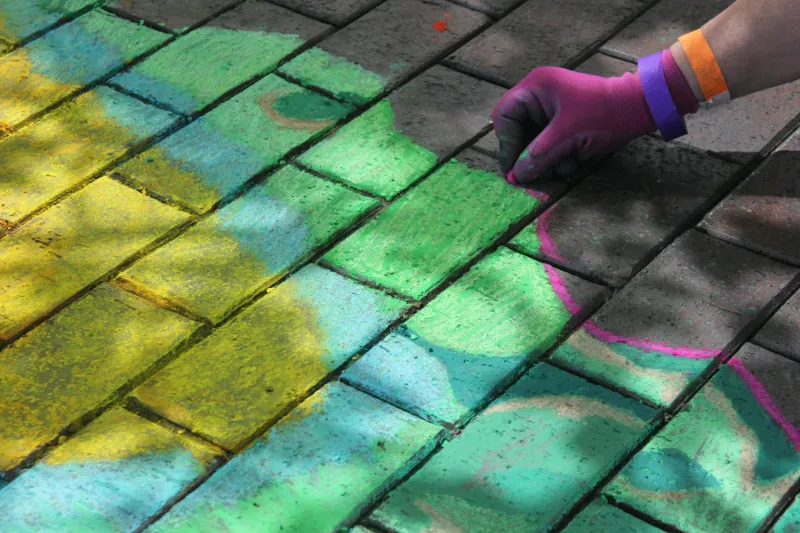
On a drizzly Tuesday morning in Newcastle's Grey Street, Sarah Chen crouches over her masterpiece—a sprawling mandala rendered in blues and whites that took six hours to complete. By evening, the rain will have claimed it entirely. This impermanence isn't a flaw in her artistic practice; it's the entire point.
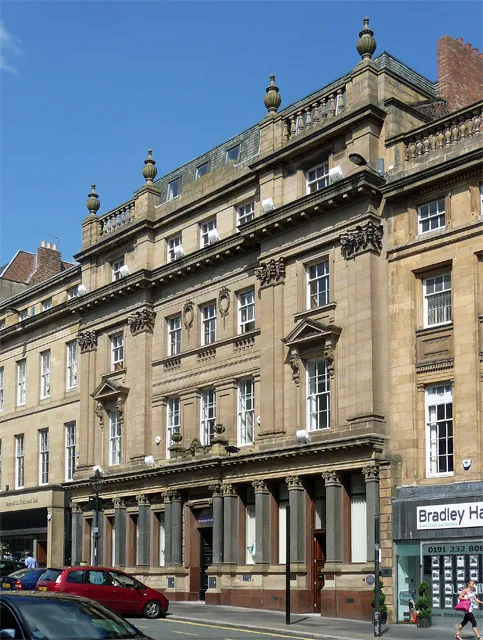 Photo: Grey Street, via s0.geograph.org.uk
Chen belongs to a growing movement of artists who have embraced the ephemeral nature of chalk art not as limitation but liberation. Across Britain, from the cobbles of Edinburgh's Royal Mile to the pedestrianised squares of Canterbury, practitioners are reviving and reimagining traditions that stretch back to the Victorian era's screevers—those pavement artists who earned their bread through temporary beauty.
"There's something profoundly honest about art that doesn't seek permanence," Chen explains, her fingers still stained with pigment. "In our hyper-documented age, creating something that exists only in the moment feels almost radical."
From Begging Bowl to Cultural Statement
The historical precedent runs deep. Victorian pavement artists operated within strict social hierarchies, their work often dismissed as mere begging with artistic pretensions. Yet their practice contained seeds of what contemporary theorists recognise as genuinely subversive cultural work—the democratisation of art, the occupation of public space, and the celebration of transience over commodity.
Today's chalk artists operate within a markedly different landscape. Local councils increasingly recognise street art as legitimate cultural programming, with cities like Bath and York commissioning temporary installations for festivals and civic celebrations. Yet the most compelling work often emerges from the margins, where artists like Manchester's Tom Radcliffe create unauthorised pieces that interrogate urban development and gentrification.
"When I draw over a proposed development site, I'm not just making art—I'm marking territory, creating a temporary memorial for what's about to be lost," Radcliffe notes. His recent series documenting demolished Victorian terraces has garnered attention from heritage campaigners and urban planners alike.
The Politics of Impermanence
What distinguishes contemporary chalk art from its historical antecedents is its explicit engagement with political themes. Artists like Birmingham's Collective Dust have transformed the medium into a vehicle for social commentary, creating large-scale works that address everything from housing inequality to climate change.
Their recent intervention during Birmingham's Commonwealth Games saw temporary chalk memorials appear throughout the city centre, honouring communities displaced by urban regeneration. The works vanished within days, but their photographic documentation continues to circulate through social media and activist networks.
"Ephemeral art can't be commodified in the same way as permanent pieces," explains Dr. Miranda Holbrook, who researches street art at the University of Leeds. "It exists outside market mechanisms, which gives it a different kind of political potency."
Communities of Practice
The revival has fostered unexpected communities. In Brighton, the monthly 'Chalk Circle' gatherings bring together everyone from art students to retired teachers, united by their commitment to temporary creation. These informal networks have become spaces for skill-sharing and political discourse, with participants often moving between chalk art and other forms of community organising.
Similar groups have emerged in Glasgow, Bristol, and Norwich, each developing distinct aesthetic languages shaped by local concerns and cultural traditions. The Glasgow collective incorporates Gaelic text into their works, while Bristol artists draw heavily from the city's graffiti heritage.
Digital Documentation and Analogue Resistance
Paradoxically, the digital age has enabled the chalk art revival. Instagram and TikTok provide platforms for documenting and sharing ephemeral works, creating virtual galleries for art that exists only briefly in physical space. Yet practitioners remain committed to the analogue experience—the tactile engagement with materials, the vulnerability to weather, the direct relationship with public space.
"Social media lets us reach audiences beyond those who happen to walk past," says Leeds-based artist Priya Sharma. "But the real work happens in those moments when someone stops, watches me draw, maybe picks up a piece of chalk themselves."
The Economics of Ephemerality
Unlike traditional street art, chalk work largely sidesteps questions of vandalism and property damage. Its temporary nature has made it more palatable to authorities while maintaining its capacity for cultural critique. This acceptance has created new opportunities for artists to engage with public space, though some worry about co-optation by commercial interests.
Several high-profile brands have attempted to commission chalk artists for marketing campaigns, prompting debates within the community about maintaining the medium's integrity. Most practitioners have resisted such overtures, viewing commercial appropriation as antithetical to their practice's democratic principles.
Looking Forward, Washing Away
As Britain grapples with questions of cultural identity and public space, chalk art offers a model for engagement that prioritises process over product, community over commerce. Its practitioners understand that in an age of permanent documentation and digital preservation, there's profound power in creating something designed to disappear.
The rain that washes away Sarah Chen's mandala also clears the pavement for tomorrow's artists, ensuring that this most ancient of canvases remains perpetually available for renewal. In its acceptance of impermanence, chalk art provides a meditation on time, place, and the courage required to create beauty without guarantee of preservation.
Perhaps this is precisely what contemporary Britain needs—art that models resilience rather than permanence, community rather than commodity, presence rather than preservation. In the end, the chalk artists remind us that not everything worth creating needs to last forever.