Electric Evangelists: The Glass Benders Illuminating Britain's Darkening Streets
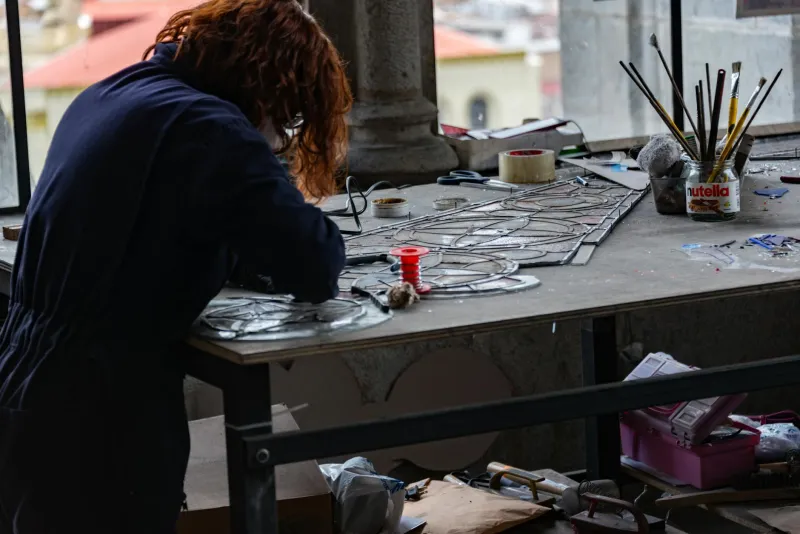
In a converted Victorian railway arch beneath Birmingham's Jewellery Quarter, Marcus Webb shapes fire into light. His torch burns at precisely 1,000 degrees Celsius as he coaxes borosilicate glass tubing into elegant cursive letters, each curve a testament to thirty years of muscle memory and mathematical precision. The workshop smells of heated glass and electrical ozone—the perfume of Britain's vanishing neon industry.
 Photo: Birmingham's Jewellery Quarter, via eqtrneuscpwebsa.azureedge.net
"People think neon is just nostalgia," Webb says, pausing to examine a half-formed ampersand glowing amber in his hands. "But this is living craft. Every tube tells a story that no bloody LED panel ever could."
The Alchemy of Noble Gases
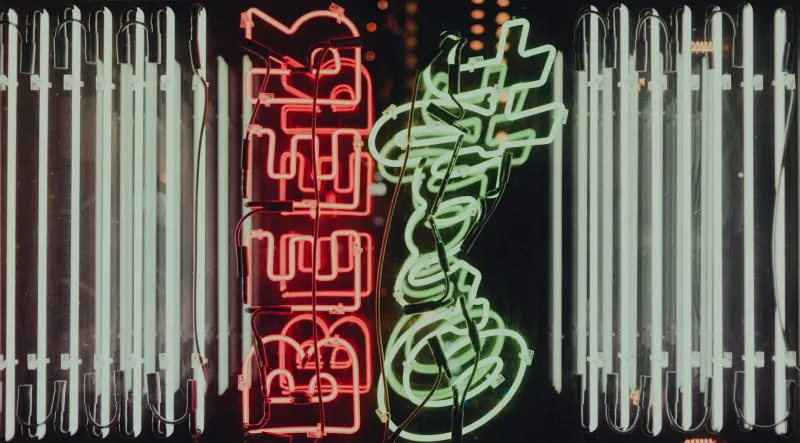
Webb represents the final generation of what industry insiders call "glass benders"—craftspeople whose knowledge spans chemistry, artistry, and electrical engineering. Their medium demands mastery of noble gases: neon for the classic orange-red glow, argon for blue, helium for pale yellow. Add phosphor coatings to the inner glass walls, and the spectrum explodes into every conceivable hue.
The process remains fundamentally unchanged since Georges Claude's 1910 Parisian breakthrough. Glass tubes are heated, bent by hand, filled with gas, and sealed. Electrodes at each end complete the circuit. Simple in concept, fiendishly difficult in execution. A single mistake—a crack, an air leak, improper gas pressure—renders hours of work worthless.
"You can't rush neon," explains Sarah Chen, whose East London workshop supplies independent galleries and boutique hotels across the capital. "The glass has its own logic. Push too hard, too fast, and it shatters. It's meditation disguised as manufacturing."
Cultural Resistance Through Illumination
China's LED revolution has decimated Britain's commercial neon industry. High streets once punctuated by glowing shop signs now surrender to uniform digital displays mandated by chain stores and planning committees. Yet this apparent death has birthed unexpected resurrection.
Britain's surviving neon artisans increasingly serve cultural institutions, independent venues, and public art commissions. The Barbican's recent exhibition "Electric Dreams" featured six British neon artists whose work transcends mere signage to become sculptural statements about urban identity and collective memory.
"Neon possesses warmth that LED can't replicate," argues Dr. Helen Marriott, curator of design at Manchester's Whitworth Gallery. "It's analogue light in a digital world—imperfect, humane, alive. When LED strips fail, they simply stop working. When neon ages, it develops character."
This character manifests in subtle ways: the gentle flicker of electrodes reaching end-of-life, the way gas molecules gradually migrate within tubes, creating unique colour variations impossible to mass-produce. Each neon installation becomes singular through time and use.
The New Illuminati
Tom Bradley discovered neon through necessity rather than passion. His Hackney brewery required signage that reflected its artisanal ethos. Frustrated by LED's clinical uniformity, he apprenticed himself to retiring master craftsman Eddie Poulton in Bermondsey.
"Eddie taught me that neon isn't decoration—it's declaration," Bradley reflects, gesturing toward his workshop's collection of vintage transformers and gas manifolds. "Every bend announces: 'A human made this. A human chose these proportions, these colours, this message.'"
Bradley now splits time between brewing and bending, his neon work adorning independent venues across South London. His clients seek authenticity in an increasingly generic urban landscape. The warm, imperfect glow of hand-bent neon signals resistance to corporate homogenisation.
Similar stories emerge across Britain's creative quarters. In Glasgow's Merchant City, former shipyard welder James McLeod transforms industrial skills into luminous art. His neon installations for the city's music venues celebrate Scotland's working-class heritage through contemporary visual language.
"Neon democratises light," McLeod argues. "Anyone can buy LED strips online. But to bend glass, mix gases, balance electrical loads—that requires knowledge passed between people. It's tribal wisdom disguised as trade craft."
Institutional Recognition
The Victoria and Albert Museum's recent acquisition of three contemporary British neon works signals growing institutional recognition. Curator Christopher Turner describes neon as "the folk art of urban illumination"—a medium that bridges high art and popular culture.
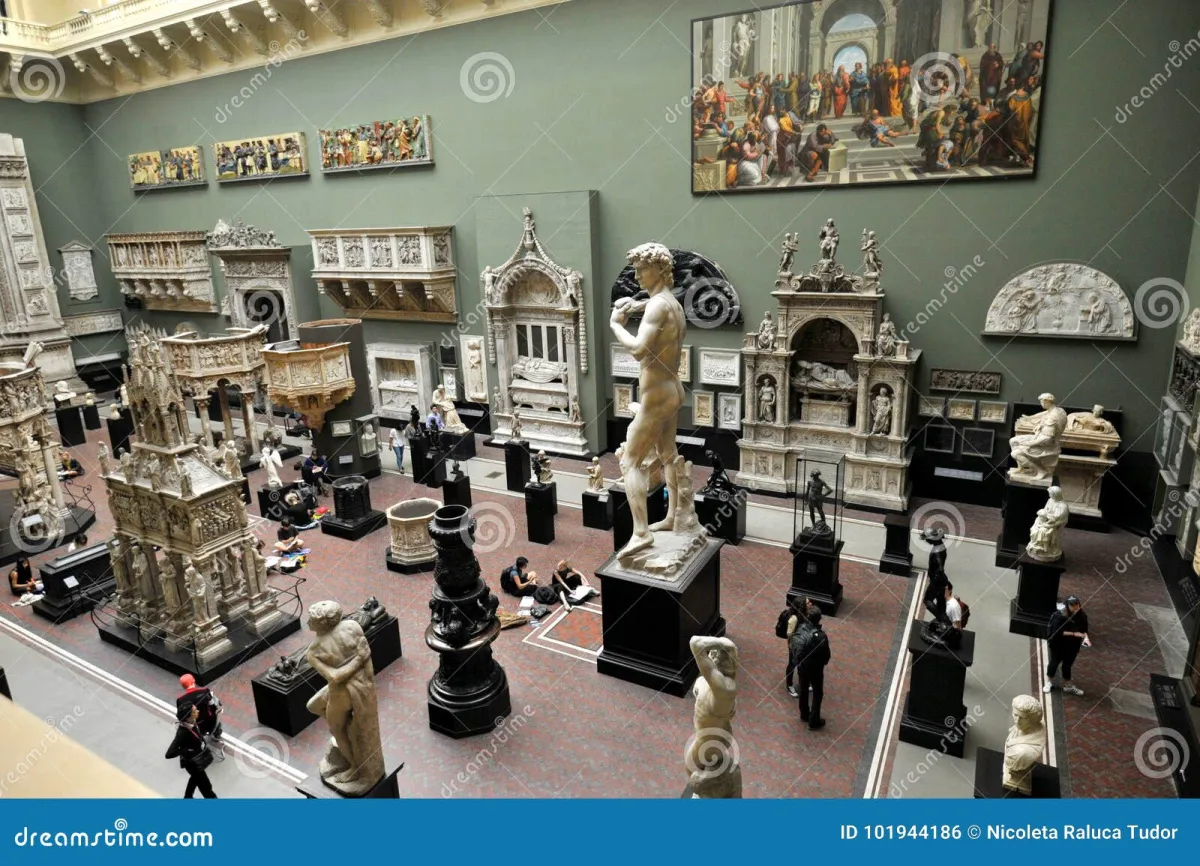 Photo: Victoria and Albert Museum, via thumbs.dreamstime.com
This legitimisation attracts younger practitioners. Emma Rodriguez, 28, learned neon techniques through YouTube tutorials and online forums after graduating from Central Saint Martins with a sculpture degree.
"My generation grew up with screens," Rodriguez explains from her Peckham studio. "Neon offers physicality that digital media lacks. You smell it, hear it, feel its heat. It occupies space rather than merely displaying information."
Rodriguez's work explores themes of migration and identity through bilingual neon texts that shift between English and Spanish as viewers move around the installations. Her pieces glow in gallery windows across London, their warm light drawing pedestrians into intimate dialogue with urban space.
The Economics of Illumination
Britain's neon revival operates on passion rather than profit. Most practitioners supplement income through teaching, restoration work, or unrelated employment. The craft's labour-intensive nature prevents mass commercialisation—precisely what preserves its integrity.
"I'll never get rich bending glass," admits Webb, adjusting a vintage transformer in his Birmingham workshop. "But I'm keeping something alive that matters. When the last neon sign goes dark, we lose part of what makes cities human."
This economic reality creates unexpected community bonds. British neon workers share knowledge freely, lending equipment and expertise across geographic boundaries. Their informal network spans from Aberdeen to Plymouth, united by commitment to craft rather than competition for contracts.
Glowing Forward
As Britain's cities increasingly surrender character to algorithmic optimisation, neon's handmade imperfection becomes radical statement. These electric evangelists don't merely preserve dying craft—they weaponise warmth against cultural sterility.
Their workshops scattered across Britain's industrial margins continue producing light that tells stories, marks places, declares presence. In an age of digital uniformity, their bent glass tubes glow with subversive humanity—reminders that illumination, like culture itself, flourishes best when shaped by human hands.