Groove Merchants: Inside Britain's Obsessive Record Fair Underground
The queue forms before dawn outside Stockport's Bramhall Methodist Church Hall. By 6:30 AM, forty-odd figures clutch thermos flasks and canvas record bags, their breath visible in October's crisp air. They've travelled from across the North West—some from as far as Liverpool and Leeds—for Stockport Record Fair's monthly ritual.
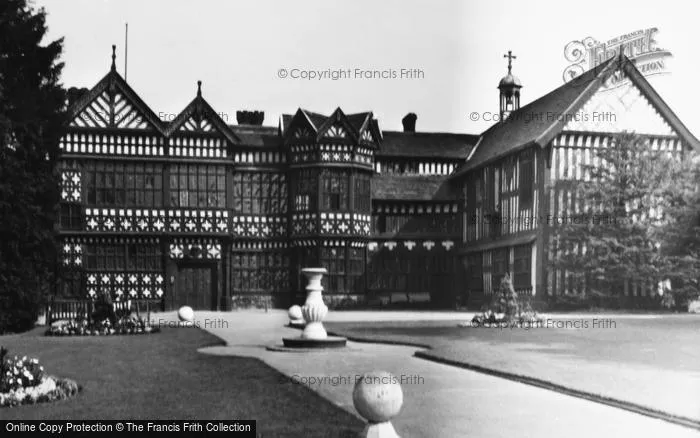 Photo: Bramhall Methodist Church Hall, via photos.francisfrith.com
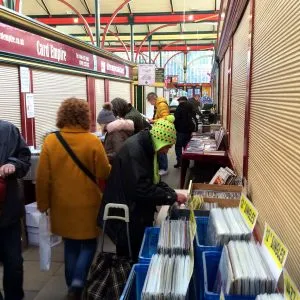 Photo: Stockport Record Fair, via stockportoldtown.co.uk
At precisely 9 AM, the doors swing open. The stampede begins.
"First through gets the rarities," explains Tony Fitzgerald, 52, a Manchester postal worker whose collection spans 8,000 LPs accumulated over thirty years. "It's not about money—it's about being first to find that record you've hunted for decades."
This scene repeats across Britain every weekend: community halls, leisure centres, and church venues transformed into temporary temples of vinyl worship. The record fair circuit represents one of Britain's most passionate subcultures—a parallel economy where cultural significance trumps commercial value, where knowledge equals currency, and where the thrill of discovery drives behaviour that borders on religious devotion.
The Anatomy of Obsession
Britain's record fair network encompasses roughly 200 regular events, from intimate monthly gatherings in market town halls to sprawling urban affairs attracting thousands. London's Hammersmith Town Hall fair draws 2,000+ visitors monthly, whilst smaller venues like Hebden Bridge Community Centre host intimate gatherings of fifty dedicated diggers.
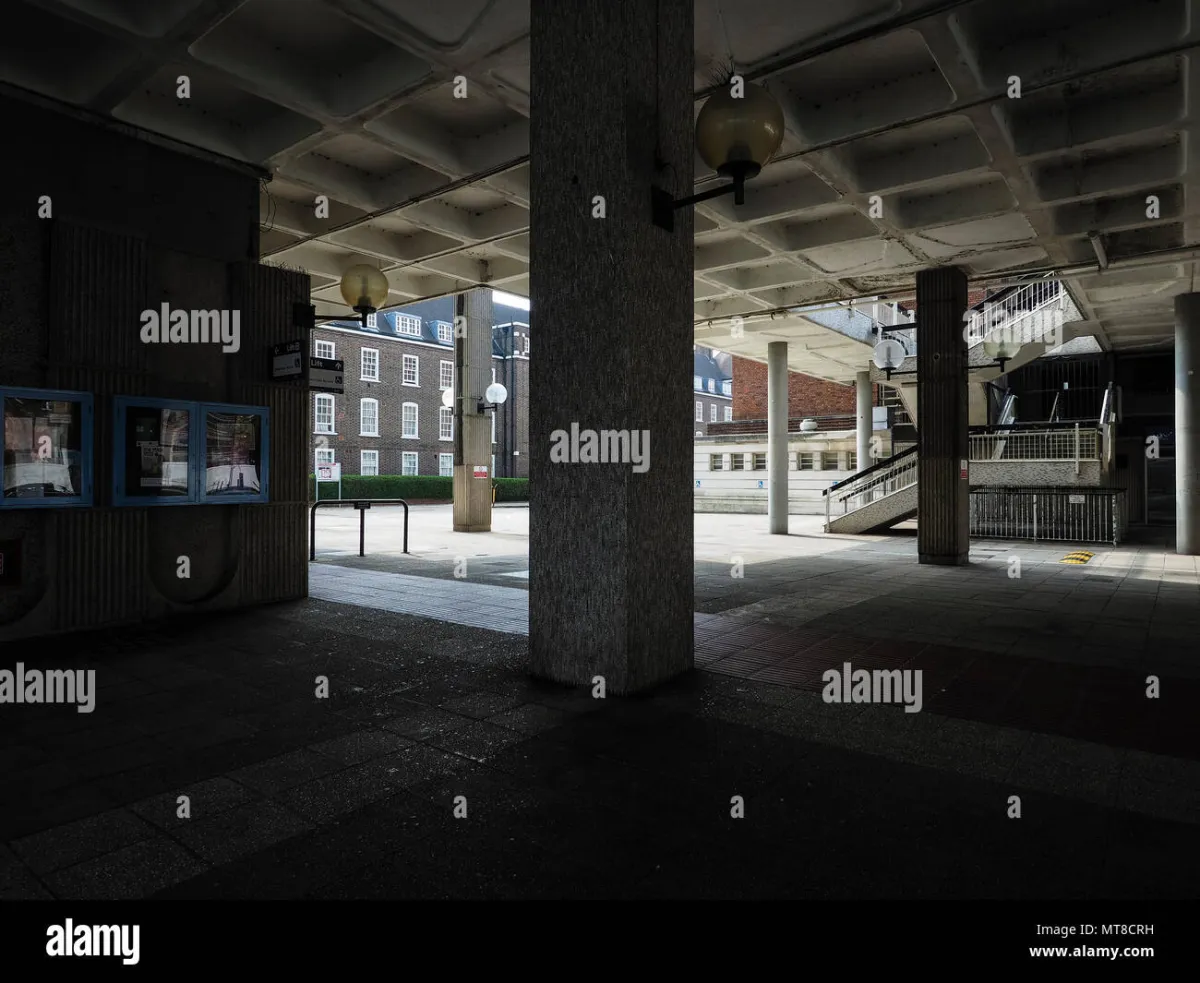 Photo: Hammersmith Town Hall, via c8.alamy.com
The demographics defy stereotype. Whilst middle-aged men traditionally dominated the scene, younger collectors and women increasingly claim territory in these sonic treasure hunts. Recent surveys suggest 35% of regular fair-goers are under 35, with female participation rising from 15% to 28% over the past decade.
"The old guard assumed vinyl was their exclusive domain," observes Emma Rodriguez, 29, whose Instagram account @vinylgirlmanc documents her collecting journey. "But music doesn't belong to anyone. My generation grew up with Spotify's infinite choice. Vinyl offers the opposite—scarcity, physicality, commitment to specific recordings."
Rodriguez represents shifting fair dynamics. Her presence challenges established hierarchies whilst contributing fresh energy to aging communities. She's learned to navigate the circuit's unwritten codes: arrive early, bring cash, know your prices, respect the queue.
Tribal Hierarchies and Sacred Knowledge
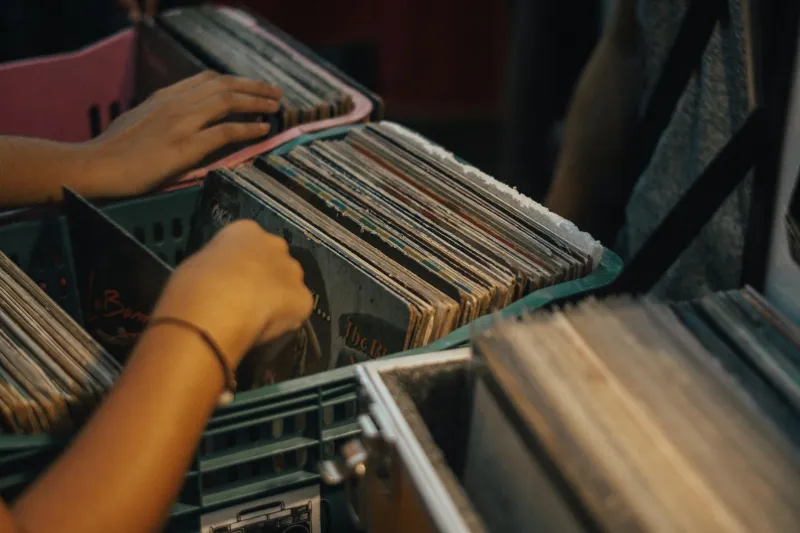
Record fairs operate according to complex social structures invisible to casual observers. Dealers occupy designated tables arranged by speciality—jazz, soul, punk, prog, classical. Regular punters develop relationships with specific dealers, gaining access to private collections and advance notifications of rare arrivals.
"It's about trust," explains Derek Williamson, whose Manchester stall specialises in Northern Soul rarities. "I've known some customers twenty years. They get first refusal on the special stuff because they understand value—not just monetary, but cultural significance."
This relationship-based economy prioritises knowledge over purchasing power. Collectors who demonstrate genuine passion and understanding gain respect regardless of budget. Conversely, wealthy newcomers attempting to buy their way into credibility face subtle resistance.
The circuit's oral tradition preserves stories that transform objects into legends. A particular pressing's history—which studio, which session, which pressing plant—becomes folklore passed between initiated collectors. These narratives multiply records' significance beyond mere musical content.
The Archaeology of Sound
Record fairs function as archaeological sites where Britain's musical history surfaces through physical artefacts. Original pressings carry information that digital formats cannot preserve: label variations, pressing quality, sleeve condition, ownership histories evidenced through wear patterns and previous owners' annotations.
"Each record tells multiple stories," notes Dr. Sarah Chen, whose academic research at Manchester University examines vinyl culture's social significance. "The music itself, obviously, but also manufacturing history, distribution patterns, previous ownership. Collectors become forensic investigators of cultural memory."
This archaeological aspect attracts collectors beyond musical appreciation. Some specialise in label designs, others in pressing variations, still others in regional distribution patterns. The physical object becomes text requiring specialist knowledge to decode fully.
Glasgow's monthly Barrowland fair attracts collectors whose interests span decades of Scottish independent labels. They trace connections between bands, producers, and studios through catalogue numbers and sleeve credits, constructing alternative narratives of Scotland's musical development.
"Major label histories get documented officially," explains collector James McLeod. "Independent scenes leave traces only in the vinyl itself. We're preserving stories that would otherwise disappear."
Economic Dynamics of Desire
The record fair economy operates on principles that confound conventional market logic. Prices fluctuate based on condition, rarity, and dealer knowledge rather than standardised valuations. Negotiations become performance art, with experienced collectors deploying psychological strategies to secure desired items.
"It's chess, not shopping," laughs Birmingham collector Maria Santos, 34. "You can't appear too eager or prices increase. But seem disinterested and dealers won't offer their best pieces. Reading the room becomes crucial skill."
This dynamic creates opportunities for savvy collectors to discover undervalued gems. Knowledge gaps between dealers and customers generate the possibility of significant finds—original pressings misidentified or underpriced due to insufficient research.
London dealer Pete Harrison recalls selling a rare Kinks acetate for £15 to a collector who recognised its significance. "Six months later, it sold at auction for £800. I wasn't angry—he earned that profit through superior knowledge. That's how the system works."
Such stories fuel the circuit's mythology, encouraging continued participation through possibility of transformative discoveries. Every crate might contain overlooked treasure, every fair offers potential revelation.
Digital Age Paradoxes
Record fairs thrive despite—or perhaps because of—digital music's dominance. Streaming services offer unlimited access but no ownership, infinite choice but no scarcity, perfect quality but no character. Vinyl provides the opposite: limited selection, imperfect sound, physical presence.
"Spotify tells you what's popular," argues Leeds collector David Park, 41. "Record fairs reveal what's personally meaningful. The effort required to find, purchase, and maintain vinyl creates emotional investment that streaming can't match."
Younger collectors particularly value this tactile engagement. Having grown up with frictionless digital consumption, they seek experiences that demand commitment and effort. Record hunting provides adventure that algorithm-driven recommendations cannot replicate.
Social media paradoxically enhances rather than diminishes fair culture. Collectors share discoveries, coordinate visits, and build communities that extend beyond physical gatherings. Instagram hashtags like #recordfair and #vinylcommunity connect geographically dispersed enthusiasts whilst preserving the circuit's essential physicality.
Cultural Commons in Practice
Record fairs create temporary cultural commons where knowledge sharing supersedes commercial competition. Collectors regularly educate newcomers, recommend dealers, and celebrate others' discoveries without expectation of direct benefit.
"There's enough music for everyone," observes Sheffield fair organiser Helen Foster. "Helping someone find their grail record doesn't diminish my collection—it strengthens the community that sustains us all."
This generosity extends to dealer practices. Many maintain affordable sections specifically for younger collectors, viewing fair pricing as investment in the circuit's future. Established collectors often gift doubles to newcomers, recognising that community health depends on continuous renewal.
The circuit's democratic access contrasts sharply with art world elitism. Anyone with passion and modest funds can participate meaningfully. Knowledge and enthusiasm matter more than credentials or connections.
Resistance Through Ritual
As Britain's high streets surrender to chain stores and digital commerce, record fairs preserve alternative economic models based on personal relationships and cultural passion. They represent resistance to algorithmic curation and corporate homogenisation.
"We're keeping something human alive," reflects Tony Fitzgerald, loading Manchester finds into his car outside Stockport Methodist Hall. "These halls fill with people who care deeply about music as physical, social experience. That matters more than convenience or efficiency."
The circuit's survival through decades of technological disruption suggests deep cultural need for communal, tactile engagement with musical heritage. In an age of infinite digital choice, the constraints and rituals of record fair culture provide meaningful structure for musical exploration.
Every weekend, Britain's groove merchants continue their archaeological work—digging through crates, sharing knowledge, preserving musical memory through collective passion. Their obsession maintains cultural commons that streaming services cannot replicate, ensuring that music's physical dimension survives digital transformation.