The Analogue Insurgency
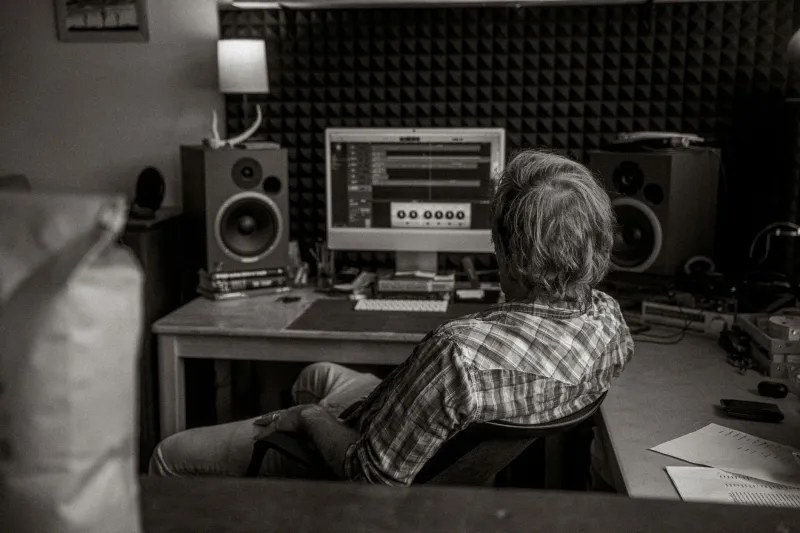
In a converted garage behind a Victorian terrace in Totterdown, Bristol, the steady hum of a vintage Nakamichi tape deck mingles with the distant rumble of traffic on the A4. Tom Bradley adjusts the recording levels as his latest composition—a sprawling ambient piece built from field recordings of the Severn Estuary—transfers to magnetic tape for the first time. The process takes forty-three minutes, exactly the length of his album, with no option to skip tracks or shuffle the sequence.
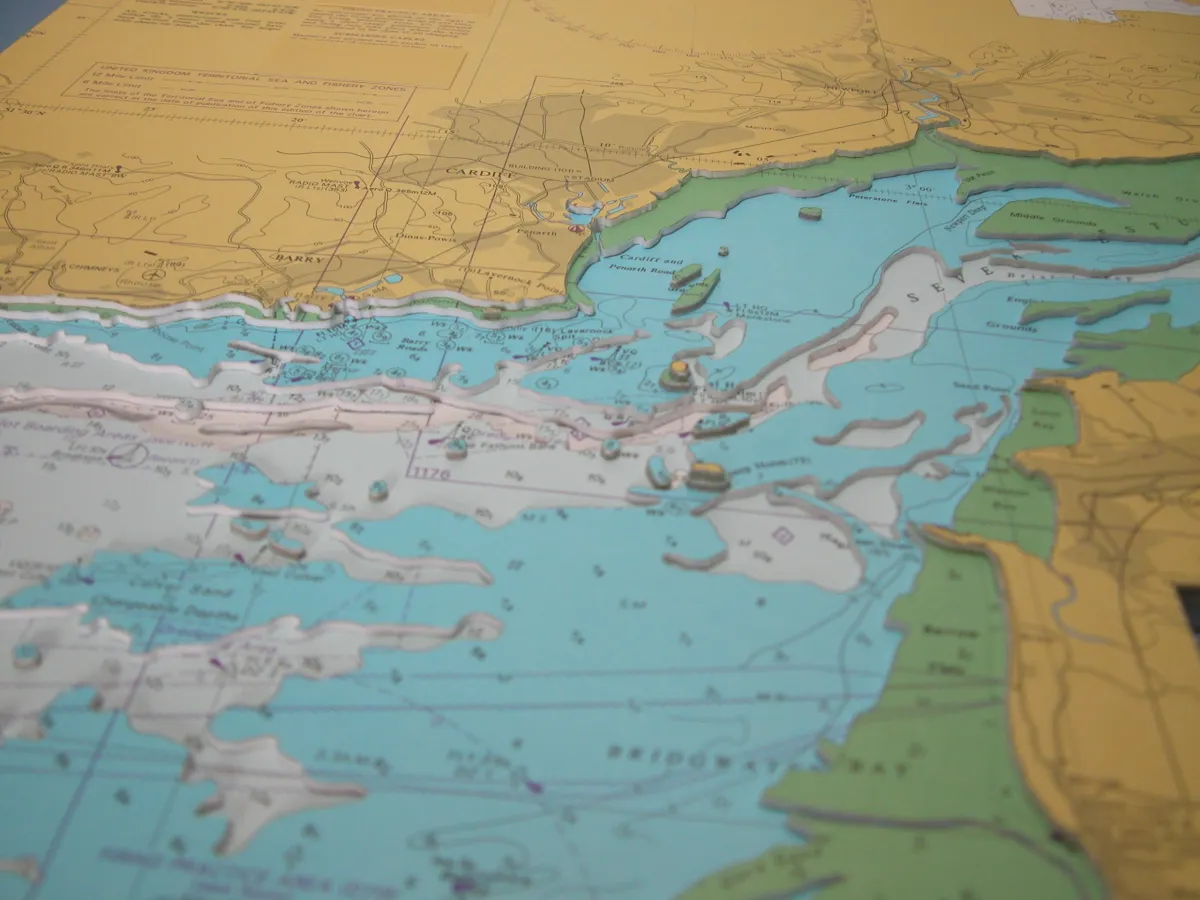 Photo: Severn Estuary, via www.latitudekinsale.com
"That's precisely the point," Bradley explains, watching the tape reels turn with mechanical precision. "Every decision becomes intentional. Every second costs something. You can't just dump everything onto a streaming platform and hope the algorithm sorts it out."
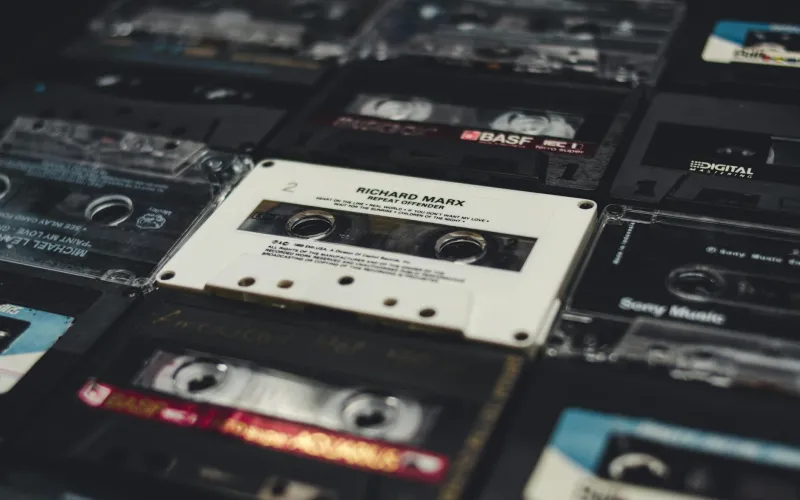
Bradley represents a growing contingent of British musicians who are embracing cassette tape as both creative medium and cultural statement. Far from nostalgic retro-fetishism, this revival speaks to deeper anxieties about artistic autonomy, attention spans, and the commodification of music in the digital economy.
The Physical Resistance
The numbers tell a surprising story. According to the British Phonographic Industry, UK cassette sales increased by 103% in 2023, reaching their highest level since 1993. Whilst still representing a tiny fraction of overall music consumption, this growth far outpaces vinyl's more publicised resurgence and suggests something beyond mere collector enthusiasm.
"Cassettes offer something that streaming can never provide," argues Dr. Sarah Chen, a cultural studies lecturer at Goldsmiths who has spent three years researching Britain's tape revival. "They're democratic, tactile, and fundamentally resistant to corporate control. You can't monetise someone's relationship with a physical object in the same way you can harvest data from their streaming habits."
This resistance to digital mediation has particular resonance for musicians emerging from Britain's post-industrial cities, where decades of economic uncertainty have fostered scepticism towards platform capitalism and algorithmic gatekeeping. In Manchester, Glasgow, and Sheffield, cassette labels have become focal points for scenes that prioritise community building over commercial success.
Laboratory of Constraints
The revival has coincided with a renewed interest in the cassette format's unique sonic properties. Unlike digital recording, tape compression introduces harmonic distortion, wow and flutter, and frequency response characteristics that many contemporary producers actively seek to recreate through expensive plugins and hardware emulations.
"Why simulate something when you can just use the real thing?" asks Zoe Palmer, whose Edinburgh-based label Magnetic North has released over sixty cassette-only albums since 2019. "The tape doesn't lie. It responds to the music, becomes part of the composition. Every copy sounds slightly different, ages differently, develops its own character."
Palmer's artists—ranging from experimental electronic musicians to post-punk revivalists—often design their compositions specifically for cassette release, exploiting the format's limitations as creative opportunities. The forty-five minute capacity of a C90 tape imposes discipline on album construction, whilst the medium's dynamic range characteristics favour certain instrumental textures over others.
Her most successful release, a collaborative album between Glasgow noise artist Morag Henderson and Bristol-based sound collagist David Webb, was recorded directly to a vintage four-track cassette recorder, with no digital processing or post-production. The resulting album, 'Magnetic Fields', sold out its initial run of 200 copies within hours of release, with copies now changing hands for over £100 on Discogs.
The Bedroom Economy
What makes the cassette revival particularly significant is its democratisation of music production and distribution. Unlike vinyl pressing, which requires substantial minimum orders and specialised facilities, cassette duplication can be achieved with basic home equipment. This accessibility has spawned a cottage industry of micro-labels operating from spare bedrooms and kitchen tables across Britain.
In a cramped flat above a chip shop in Hackney, Maria Santos runs Spectral Emissions, a label specialising in "hauntological electronics and industrial folk." Her entire operation consists of a twin-deck cassette player, a colour laser printer, and a kitchen table where she assembles each release by hand.
"The whole thing costs maybe £3 per unit to produce," Santos explains, folding J-cards for her latest release whilst her cat observes from a nearby windowsill. "I can break even selling twenty copies, turn a small profit at fifty. That's impossible with any other physical format."
This economic model has enabled Santos to take risks on experimental artists who would struggle to find commercial backing. Her catalogue includes field recording projects, algorithmic composition experiments, and a recent collaboration between a Sheffield steel worker and a sound artist who creates music from recordings of industrial machinery.
Community Cartography
Beyond individual labels, the cassette revival has fostered new forms of musical community that operate largely outside mainstream industry structures. Cassette fairs—informal gatherings where collectors, musicians, and label operators trade tapes and share discoveries—have become regular fixtures in cities across Britain.
The largest of these, Manchester's quarterly Magnetic Market, regularly attracts over 300 participants to a community centre in Chorlton. Unlike record fairs, which often prioritise valuable collectibles, cassette gatherings maintain a distinctly egalitarian atmosphere where homemade releases receive equal attention to rare vintage finds.
"There's no hierarchy here," observes market organiser James Wright, surveying tables laden with hand-dubbed tapes and photocopied artwork. "Someone's bedroom recording gets the same respect as a limited Japanese import. It's about the music, not the investment potential."
This democratic spirit extends to the music itself. Many cassette artists deliberately avoid streaming platforms, making their work available only through physical sales and word-of-mouth recommendation. The result is a parallel music ecosystem that operates according to different values and priorities than the mainstream industry.
The Anti-Algorithm
For many participants, the cassette revival represents explicit resistance to algorithmic culture and data harvesting. Streaming platforms' recommendation systems, designed to maximise engagement and advertising revenue, often funnel listeners towards familiar genres and established artists. Cassettes, by contrast, offer no data to harvest and no metrics to optimise.
"When you buy a cassette, that transaction is invisible to Spotify, to Google, to Facebook," explains digital rights activist and musician Alex Morrison, whose London-based collective Offline Audio releases exclusively on tape. "Your listening habits remain private. Your musical relationships develop organically, through human recommendation rather than machine learning."
This privacy extends to the listening experience itself. Unlike streaming services, which track every skip, pause, and replay, cassettes offer no insight into listener behaviour. The music exists in a pre-digital bubble where attention cannot be monetised or manipulated.
Temporal Rebellion
Perhaps most significantly, cassette culture demands a different relationship with time. The format's linear nature—you cannot skip to track seven without passing through tracks one through six—enforces sequential listening in an era of infinite choice and shortened attention spans.
"It's a form of meditation," suggests cognitive scientist Dr. Helen Park, whose research at Cambridge University examines how physical media affects musical perception. "The cassette listener commits to experiencing music as the artist intended, in the sequence they chose, at the pace they determined. That's increasingly radical in a culture built around instant gratification."
This temporal dimension has attracted musicians interested in creating immersive, narrative experiences that resist fragmentation. Albums designed for cassette often feature seamless transitions between tracks, extended ambient passages, and carefully crafted emotional arcs that depend on sequential listening.
Future Magnetic
As Britain's cassette revival enters its second decade, participants face questions about sustainability and growth. The format's appeal lies partly in its outsider status and resistance to commercialisation—qualities that could be threatened by mainstream adoption.
Yet for now, the movement continues to expand through networks of mutual aid and artistic collaboration that operate largely below the cultural radar. In cities across Britain, musicians gather in living rooms and community centres to share tapes, swap techniques, and plan releases that will reach audiences measured in dozens rather than millions.
"We're not trying to compete with Spotify," reflects Tom Bradley, ejecting his completed album from the Nakamichi and examining the cassette shell with satisfaction. "We're building something different entirely. Something that can't be quantified or optimised or sold to advertisers."
In an age of infinite digital reproduction, the cassette's fundamental scarcity—its fixed capacity, its physical deterioration, its resistance to perfect copying—has become its greatest strength. Each tape carries the imprint of its creation and the history of its handling, becoming a unique artifact in a world of identical files.
The magnetic rebellion continues, one carefully dubbed tape at a time.