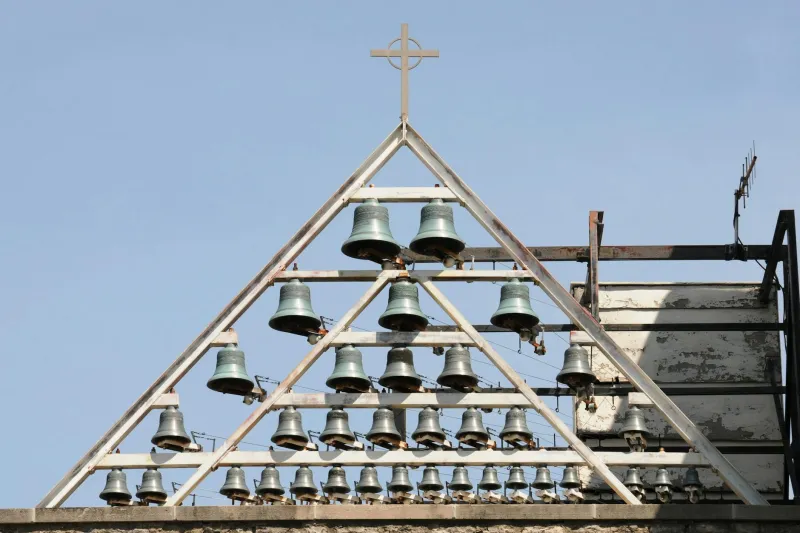
The Algorithm in the Tower
At precisely 7:30 PM every Thursday, eight figures climb the narrow stone steps of St. Mary's Church in Taunton, their footsteps echoing against walls that have witnessed this ritual for over four centuries. But tonight's ringers aren't the grey-haired traditionalists one might expect. Among them is Zara Ahmed, a 24-year-old software engineer from London, and James McKenzie, a mathematics PhD student whose day job involves artificial intelligence research at Edinburgh University.
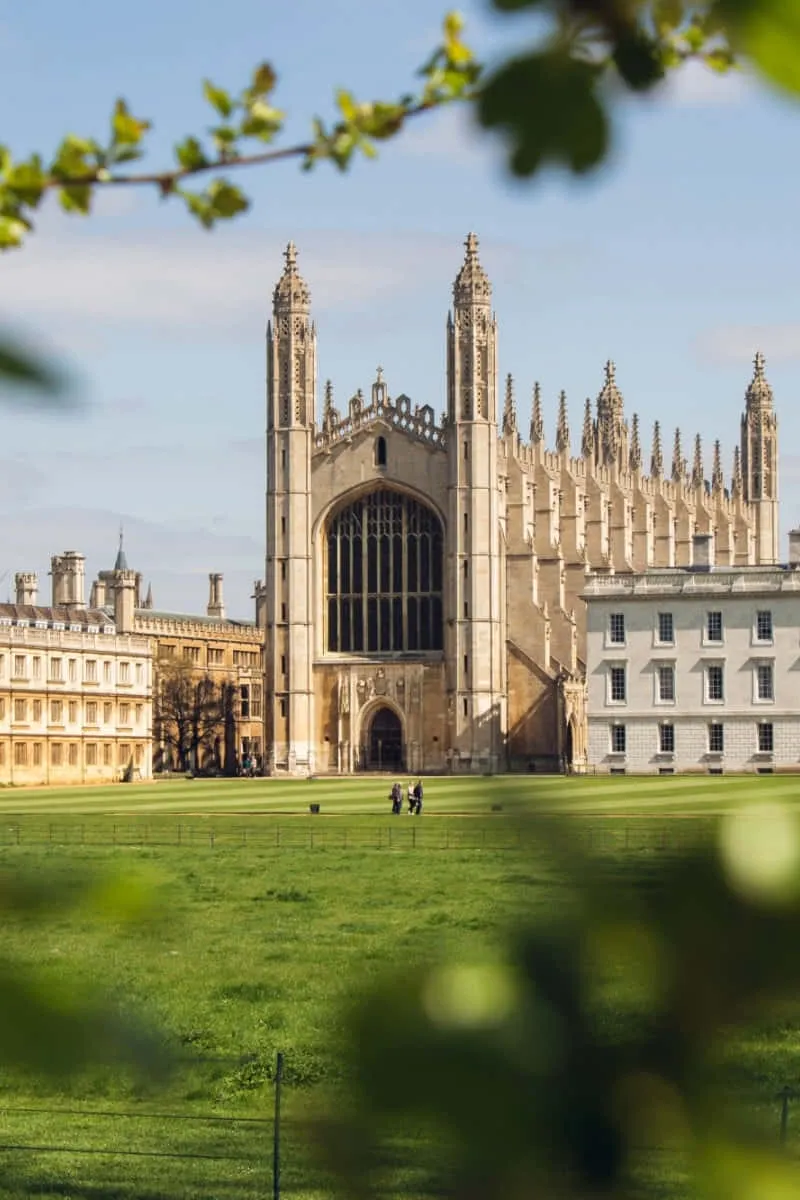 Photo: Cambridge University, via wallpapers.com
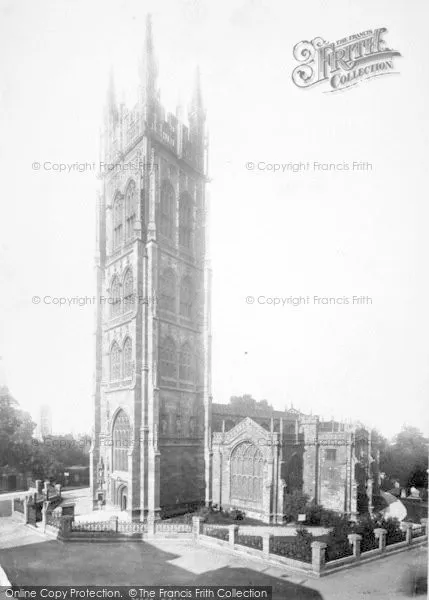 Photo: St. Mary's Church in Taunton, via photos.francisfrith.com
They've come for change ringing—the uniquely British art of creating complex musical patterns through the systematic permutation of bell sequences. What appears to casual observers as quaint church tradition reveals itself, upon closer examination, as one of the world's most sophisticated forms of algorithmic composition, predating computer science by centuries.
The Mathematics of Sacred Sound
Change ringing operates on principles that would be familiar to any programmer: systematic variation through rule-based transformation. With eight bells, ringers can create over 40,000 unique sequences without repetition—a mathematical possibility space that has captivated minds from Newton to contemporary data scientists.
"It's live coding with bronze," explains Dr. Sarah Pemberton, a complexity theorist at Cambridge who discovered campanology during her postdoctoral research. "Each sequence follows strict algorithmic rules, but the execution requires real-time problem-solving and collective coordination that no computer can replicate."
The patterns, known as "methods," bear names that reflect their regional origins and mathematical properties: Yorkshire Surprise Major, Cambridge Surprise Royal, Grandsire Triples. Each method represents a unique solution to the challenge of ordering bells through systematic progression, creating what campanologists term "truth"—sequences where each possible permutation occurs exactly once.
A Generational Shift in Ancient Towers
The Central Council of Church Bell Ringers reports a 23% increase in membership among under-30s since 2019, reversing decades of decline that threatened the tradition's survival. This renaissance stems partly from active recruitment by universities—Cambridge, Oxford, and Imperial College London now run campanology societies that attract students from engineering, mathematics, and music departments.
"I started ringing because a friend mentioned it was like group music-making meets puzzle-solving," says Tom Chen, a third-year computer science student at Durham University who now captains his college's bell-ringing society. "The social dynamics are fascinating—you're creating something beautiful together, but it requires absolute precision and trust."
This generational shift has introduced new dynamics to tower culture. Younger ringers often approach methods analytically, using smartphone apps to practise sequences and sharing performance videos through dedicated Discord servers. Traditional ringers, some of whom learned their craft in the 1960s, initially viewed these technological interventions with suspicion but increasingly recognise their value in attracting and training new participants.
Regional Rivalries and Cultural Identity
Britain's campanological landscape reflects deep regional identities that persist despite globalisation. Yorkshire towers pride themselves on complex surprise methods that demand mathematical precision, while Devonshire ringers favour call changes that emphasise musical beauty over algorithmic complexity. These stylistic differences fuel competitive spirits that rival football loyalties in their intensity.
The annual National 12-Bell Contest attracts teams from across Britain, with preparation involving months of practice and strategic planning. Last year's competition, held at Birmingham Cathedral, drew over 2,000 spectators who understood the subtle technical differences between performances that might sound identical to untrained ears.
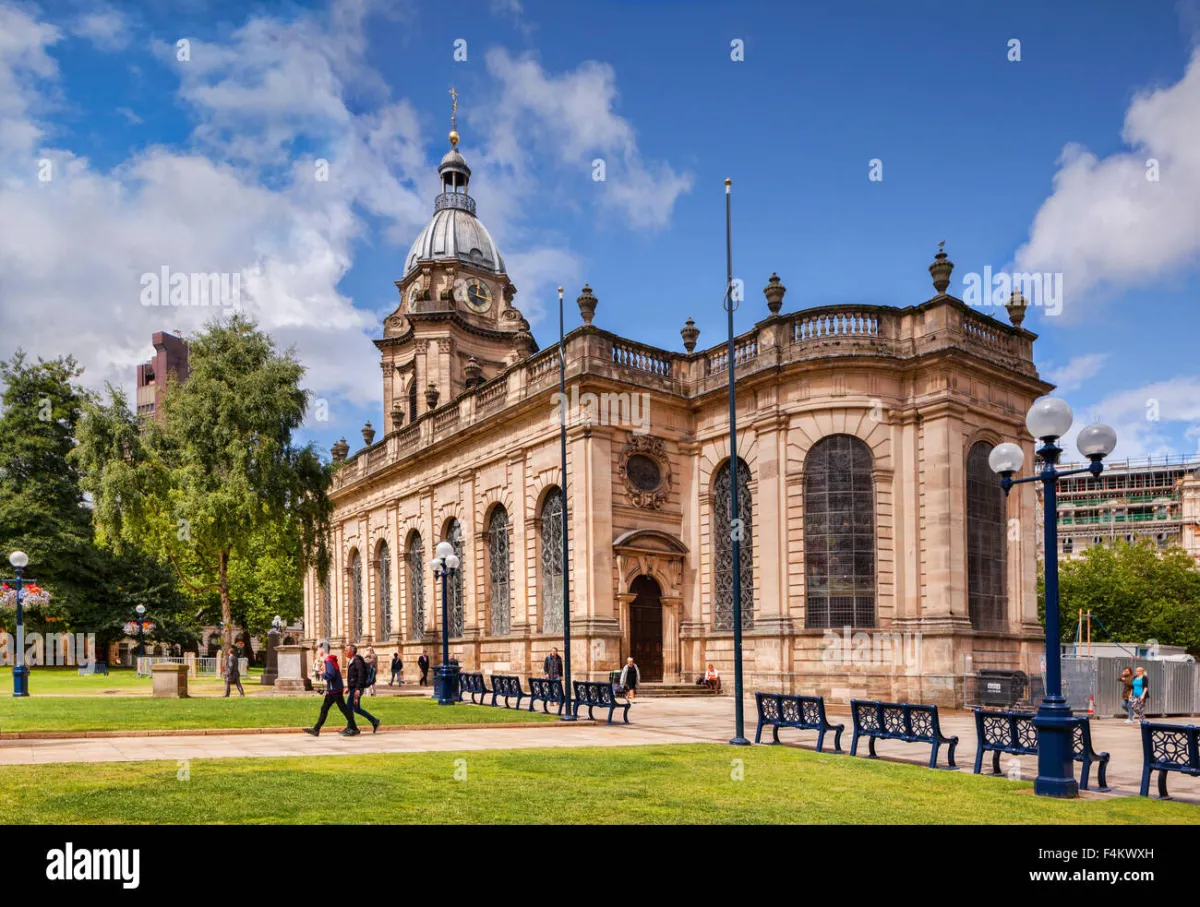 Photo: Birmingham Cathedral, via c8.alamy.com
"There's genuine regionalism here that you don't find in many cultural practices anymore," observes Dr. Michael Harrison, an ethnomusicologist at Sheffield University who studies campanological traditions. "A Yorkshire ringer can identify a Cornish method within seconds, and vice versa. It's like musical dialect preservation."
Technology Meets Tradition
The integration of digital tools into campanological practice reflects broader tensions between heritage preservation and contemporary accessibility. Apps like "Method Ringers" allow practitioners to study sequences silently, while YouTube channels dedicated to technique analysis attract thousands of subscribers globally.
However, technology's role remains carefully circumscribed. Towers that install electronic practice systems—allowing silent rehearsal through headphones—often face criticism from purists who argue that authentic campanology requires physical engagement with bronze bells and stone towers. These debates echo larger cultural conversations about authenticity and innovation in traditional practices.
Some progressive towers have embraced hybrid approaches. St. Bartholomew's in Brighton streams their Sunday service ringing live, attracting an international audience of campanology enthusiasts. The tower's Facebook group includes members from Australia, Canada, and the United States, creating virtual communities around local practice.
The Physics of Collective Precision
What distinguishes campanology from other musical traditions is its demand for absolute temporal precision within collective performance. Unlike orchestral music, where conductors coordinate timing, change ringing requires each participant to maintain rhythm independently while adapting to subtle variations in their colleagues' execution.
"It's like being part of a human clockwork mechanism," explains Professor Janet Williams, a mechanical engineer who rings at Gloucester Cathedral. "The margin for error is incredibly small—a deviation of 0.2 seconds disrupts the entire sequence. But unlike machines, we're constantly adjusting to each other's micro-variations."
This precision requirement has attracted attention from researchers studying collective behaviour and distributed coordination. Recent studies suggest that experienced ringers develop heightened sensitivity to temporal patterns, with neurological adaptations similar to those found in professional musicians and air traffic controllers.
Challenges and Continuity
Despite renewed interest among younger practitioners, British campanology faces significant structural challenges. Church closures and heritage building maintenance costs threaten the physical infrastructure supporting the tradition. Many towers require substantial investment to maintain bells and fittings, costs that cash-strapped parishes struggle to meet.
The Church of England's recent decision to sell redundant churches has sparked campaigns to preserve campanologically significant installations. The Redundant Churches Campaign, supported by campanologists nationwide, argues that bell towers represent irreplaceable acoustic heritage that cannot be relocated or replicated.
The Sound of Mathematical Beauty
As evening practice concludes at St. Mary's Taunton, the final sequence rings out across the Somerset countryside—a "plain course of Grandsire Doubles" that represents five centuries of accumulated mathematical and musical knowledge. For the ringers descending the tower steps, this weekly ritual provides something increasingly rare in contemporary life: collective creation that demands both intellectual rigour and physical coordination.
"People ask why we don't just use recordings," reflects Ahmed, packing her ringing gloves into a worn leather bag. "They're missing the point entirely. This isn't about the sound alone—it's about the live mathematics, the human precision, the collective problem-solving. It's algorithmic music that requires eight minds working as one."
In an age of digital simulation and virtual collaboration, Britain's campanologists preserve something irreplaceable: the knowledge that the most sophisticated patterns emerge not from individual genius but from collective discipline, mathematical precision, and the patient cultivation of acoustic tradition.