The Silent Stages Speak Again
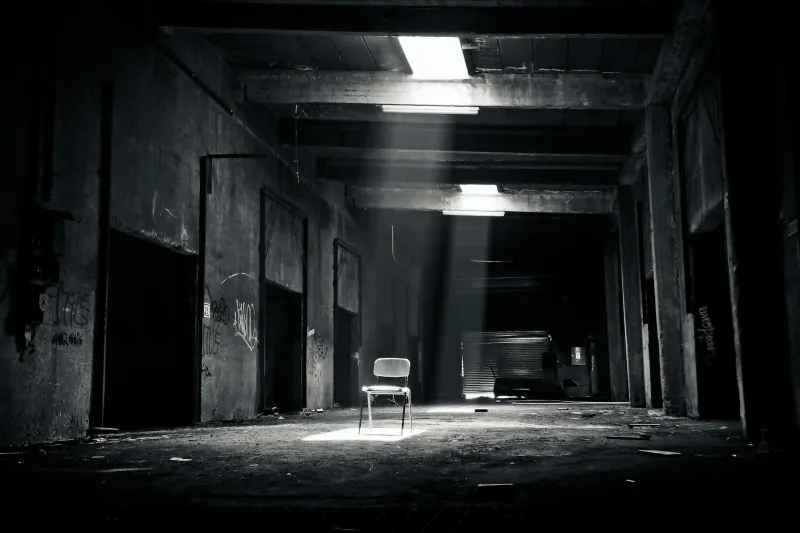
In the shadowed corners of Britain's urban landscape, where peeling paint and broken glass tell stories of cultural decline, an extraordinary renaissance is quietly unfolding. Across Manchester, Birmingham, Cardiff, and the forgotten boroughs of London, artists are slipping through the cracks of bureaucracy and property law to reclaim the nation's abandoned theatres, transforming these spectral venues into vibrant crucibles of contemporary performance.
The movement represents more than mere opportunism. These cultural reclamations speak to a profound shift in how Britain's creative communities navigate the intersection of heritage, economics, and artistic expression. Where local councils see liability and property developers envision demolition, artists perceive possibility—walls that still echo with decades of applause, stages that refuse to surrender their purpose.
Ghosts in the Machine
The Adelphi Theatre in Salford stands as a testament to this phenomenon. Abandoned for nearly two decades, its ornate Victorian interior had become a canvas for decay until collective Phantom Works secured temporary occupation rights in 2023. What emerged was not restoration in any traditional sense, but rather a radical reimagining of theatrical space.
"We're not trying to recreate what was," explains Sarah Chen, one of the collective's founding members. "These buildings carry their scars, their history of neglect. That becomes part of the performance, part of the conversation we're having with audiences about what culture means in contemporary Britain."
The collective's inaugural production, Voices from the Void, invited audiences to navigate the theatre's damaged infrastructure as performers emerged from broken balconies, crumbling boxes, and the orchestra pit now filled with rainwater. The piece became a meditation on cultural memory, urban decay, and the persistence of artistic expression in spaces society has deemed worthless.
The Economics of Abandonment
This grassroots reclamation movement illuminates the stark realities facing Britain's cultural infrastructure. Arts Council England reports that over 300 performance venues have closed permanently since 2010, casualties of austerity measures, rising property values, and the devastating impact of the pandemic. Many more exist in limbo—too expensive to maintain, too valuable to demolish, too complex to repurpose.
The artists occupying these spaces operate in legal grey areas, often securing short-term agreements with property owners who recognise that creative occupation provides security and maintenance that empty buildings lack. These arrangements, whilst precarious, have enabled extraordinary experimentation.
In Cardiff's Tiger Bay, the abandoned Seamen's Institute has become home to Tidal Collective, a group specialising in immersive soundscapes that utilise the building's unique acoustic properties. The venue's deteriorating state creates natural reverb chambers and unexpected sound channels that conventional concert halls cannot replicate.
Beyond Nostalgia: Radical Reimagining
What distinguishes this movement from heritage preservation is its fundamental rejection of nostalgic restoration. These artists are not attempting to return venues to their former glory but rather engaging with their current state as a creative medium. The cracks in the walls, the missing floorboards, the broken chandeliers—all become integral to the artistic vision.
At London's derelict Granville Theatre in Walham Green, multimedia artist collective Liminal Space has created an ongoing installation that responds to the building's continuing deterioration. As rain seeps through the roof and vegetation reclaims the backstage areas, the installation evolves, creating a dialogue between human creativity and natural reclamation.
"We're witnessing the birth of post-heritage performance," observes Dr. Marcus Fieldhouse, cultural theorist at Goldsmiths University. "These artists are refusing the binary between preservation and demolition, instead finding a third way that honours the past whilst embracing transformation."
Community and Connection
The impact extends beyond artistic innovation to community regeneration. Many of these reclaimed venues have become focal points for neighbourhoods previously written off as cultural deserts. Local residents, initially sceptical of the mysterious activities in their abandoned landmarks, increasingly participate as audiences, collaborators, and advocates.
The former Palace Theatre in Middlesbrough exemplifies this transformation. Northern Voices, the collective that has occupied the space since 2022, prioritises community engagement alongside experimental performance. Their monthly Ghost Light sessions invite local residents to share stories, memories, and talents within the theatre's haunted grandeur.
The Precarious Present
Yet this renaissance exists under constant threat. The temporary nature of most occupancy agreements means that extraordinary creative work can vanish overnight when property sales conclude or development plans activate. Several of the most innovative projects have already fallen victim to gentrification and commercial redevelopment.
The loss of the Coronet Theatre squat in Elephant and Castle in late 2023 eliminated three years of groundbreaking work by Spectral Collective, whose site-specific performances had garnered international attention. The building now stands empty again, awaiting conversion into luxury flats.
Cultural Archaeology for the Future
As Britain grapples with questions of cultural identity, funding priorities, and urban development, these phantom stages offer compelling alternatives to conventional approaches. They demonstrate that cultural value cannot always be measured in economic terms and that artistic innovation often emerges from spaces and circumstances that traditional institutions would reject.
The artists occupying these forgotten venues are not merely creating performances—they are conducting cultural archaeology, excavating layers of meaning from buildings that embody Britain's complex relationship with its entertainment heritage. In their hands, decay becomes fertile ground for creation, abandonment becomes opportunity, and the ghosts of past performances become collaborators in shaping the future of British theatre.
Whether this movement can achieve lasting impact remains uncertain, dependent on policy changes, funding innovations, and society's willingness to embrace unconventional approaches to cultural preservation. What is certain is that these phantom stages are already changing how we understand the relationship between space, performance, and community in twenty-first century Britain.