The Heretical Craft
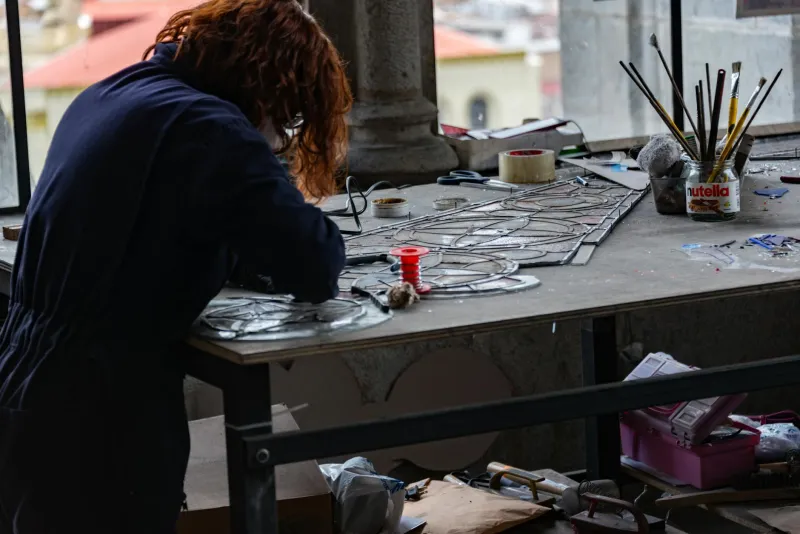
In a converted Victorian mill in Todmorden, Sarah Chen holds a fragment of cobalt glass to the afternoon light. The shard, no larger than her palm, pulses with an intensity that seems to defy the grey Yorkshire sky beyond. This is not destined for cathedral walls or chapel windows—instead, it will join dozens of other pieces in an installation exploring the fractured nature of modern British identity, commissioned for a former textile factory turned arts centre in nearby Hebden Bridge.
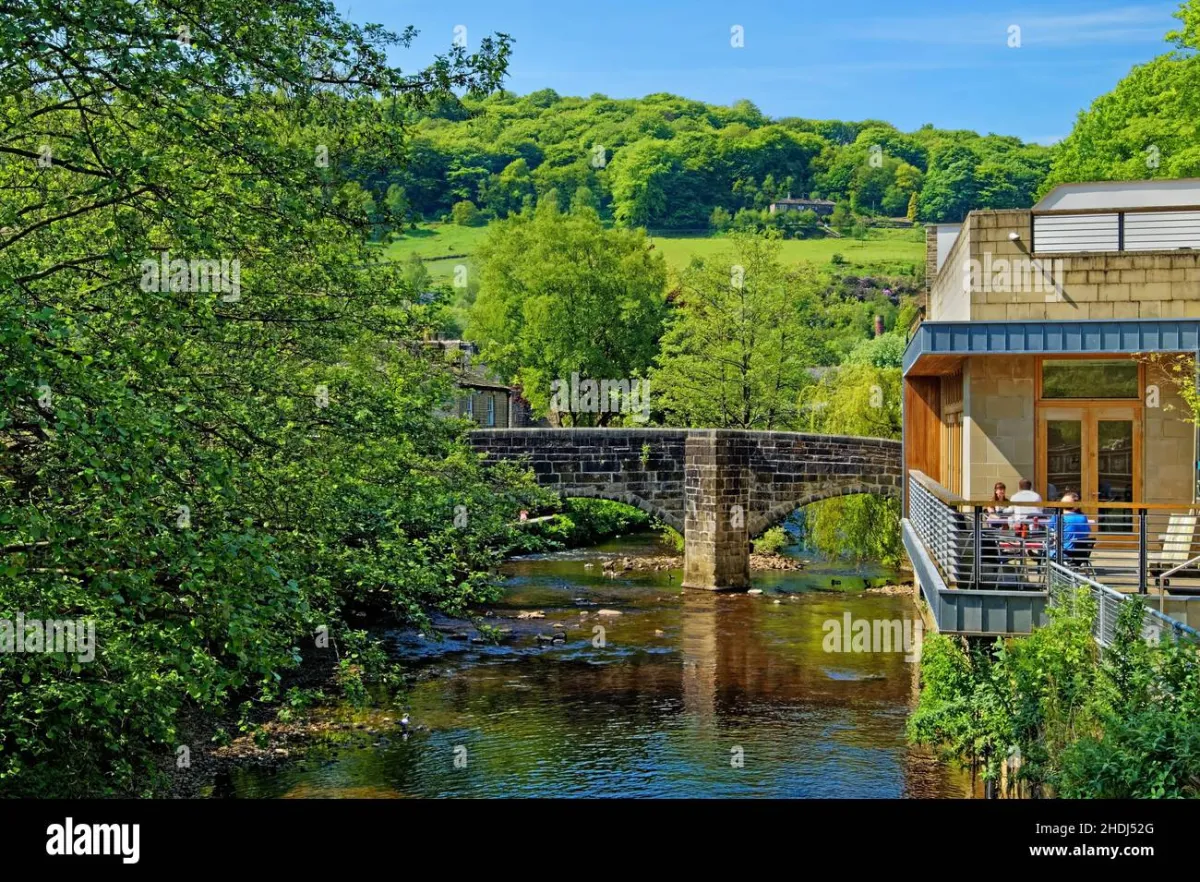 Photo: Hebden Bridge, via c8.alamy.com
Chen represents a growing movement of contemporary artists who are stripping stained glass of its religious associations and wielding it as a tool for secular, often subversive, commentary. After centuries confined to ecclesiastical spaces, Britain's most luminous art form is experiencing an unprecedented renaissance in galleries, public installations, and private commissions across the nation.
"Glass has this extraordinary capacity for transformation," Chen explains, her workspace cluttered with lead came, soldering irons, and sketches for upcoming projects. "Light becomes colour, colour becomes emotion, emotion becomes meaning. But for too long, we've allowed the Church to monopolise that alchemy."
Beyond the Sacred
The statistics paint a stark picture of Britain's changing spiritual landscape. Church of England attendance has fallen by 12% since 2019 alone, with rural parishes particularly affected. Simultaneously, hundreds of redundant churches face uncertain futures, their stained glass windows often the most valuable—and vulnerable—artifacts remaining.
Yet as traditional commissions dwindle, a new generation of glass artists is emerging from Britain's art schools with radically different visions. At Glasgow School of Art, where the stained glass department survived the devastating 2018 fire, students are creating works that address climate change, social inequality, and cultural displacement with the same intensity their predecessors once reserved for biblical narratives.
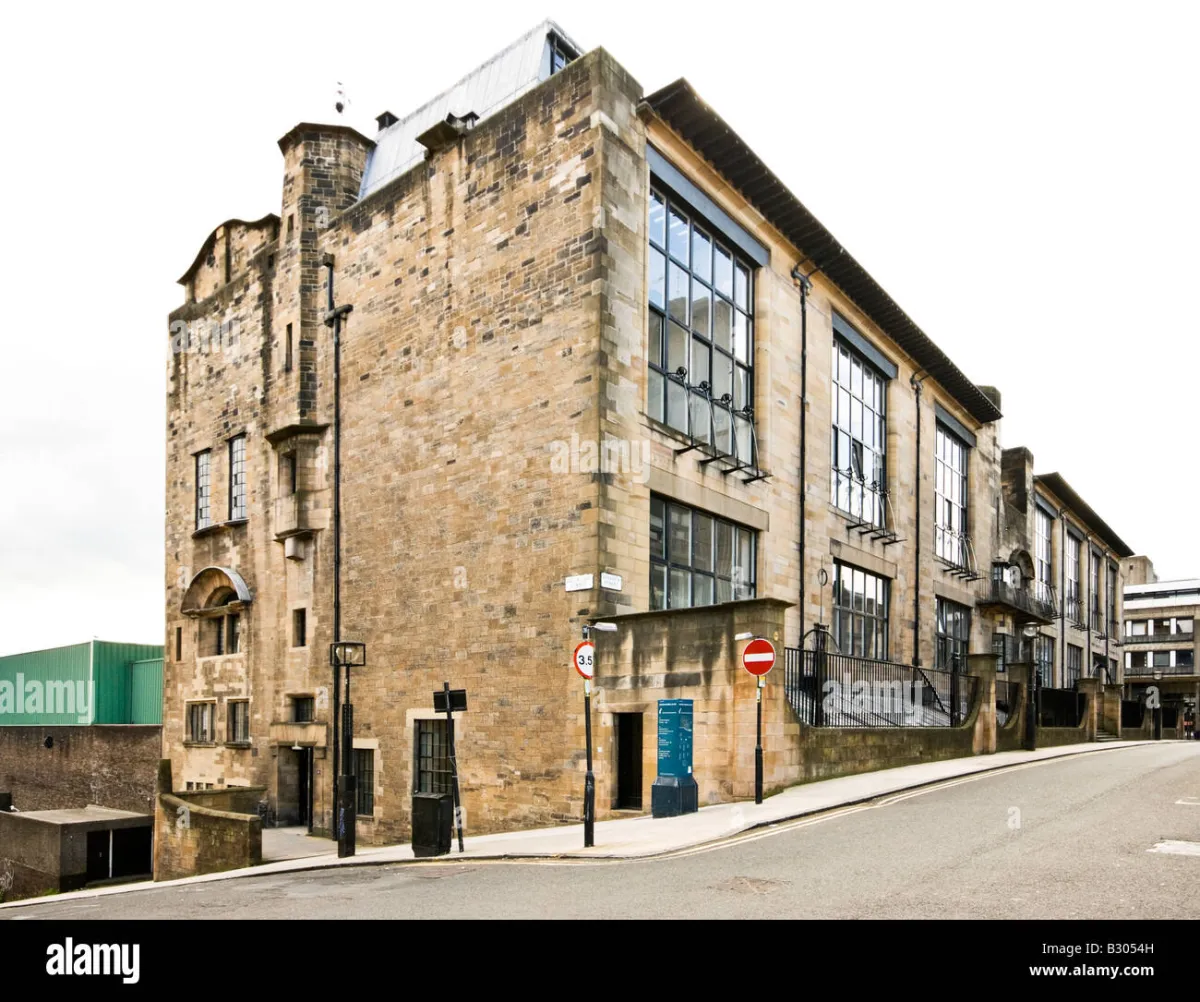 Photo: Glasgow School of Art, via c8.alamy.com
"We're not abandoning the spiritual dimension," insists Marcus Webb, a recent graduate whose installation 'Fractured Light' transforms discarded smartphone screens into kaleidoscopic panels. "We're expanding it. Every piece of glass holds light, and light is fundamentally about revelation—whether that's divine or deeply human."
Webb's work, currently installed in a decommissioned textile mill in Bradford, uses salvaged materials to explore themes of technological obsolescence and environmental decay. Visitors walk through corridors where fragments of broken devices catch and scatter LED light, creating an almost cathedral-like atmosphere of contemplation.
The Secular Pilgrimage
This shift towards secular stained glass reflects broader changes in how Britain conceives of sacred space. Where previous generations might have sought transcendence in religious buildings, contemporary audiences are finding it in converted industrial spaces, purpose-built galleries, and unexpected urban interventions.
In Sheffield, the Crucible Theatre recently commissioned local artist David Tremlett to create a series of stained glass panels for its newly renovated foyer. The work, titled 'Steel and Light', incorporates fragments of metal from the city's industrial heritage, fused with traditional glass techniques to create panels that glow with the amber and crimson of molten steel.
"It's about creating new mythologies," Tremlett explains. "Sheffield's relationship with fire and metal is as profound as any religious tradition. Why shouldn't that deserve its own cathedral?"
The commission has proved enormously popular, with visitors often spending extended periods in contemplation before performances. Theatre director Sarah Brigham reports that the space has taken on an unexpected role as a gathering place for the city's arts community.
Industrial Resurrection
Perhaps nowhere is this transformation more evident than in the converted factories and warehouses that now house many of Britain's most innovative glass studios. In Glasgow's East End, the old Templeton Carpet Factory—a Victorian building designed to echo the Doge's Palace in Venice—now hosts three separate stained glass workshops, each pursuing radically different approaches to the medium.
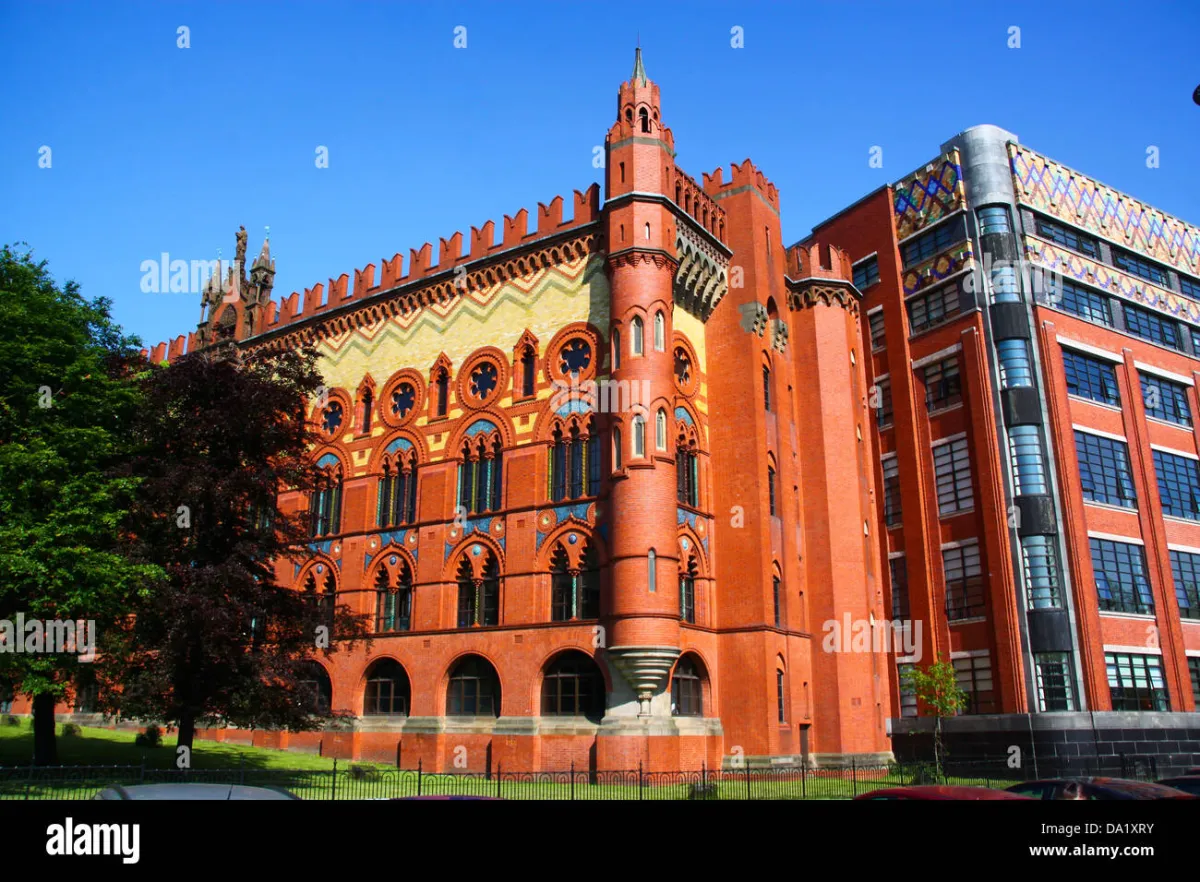 Photo: Templeton Carpet Factory, via c8.alamy.com
Among them is Collective Glass, a collaborative studio where artists work alongside refugees and asylum seekers to create pieces that explore themes of displacement and belonging. Their latest project, 'Shattered Journeys', uses traditional Syrian glass-painting techniques alongside British lead-came methods to create panels that tell stories of migration and settlement.
"Glass crosses all cultural boundaries," explains studio coordinator Fatima Al-Rashid, herself a refugee from Damascus who trained in traditional Islamic glass arts. "When light passes through these pieces, it doesn't recognise borders or religions. It simply illuminates truth."
The studio's work has been acquired by several major British museums, including Tate Modern, which recently featured a Collective Glass piece in its exhibition on contemporary British craft.
The Digital Resistance
What makes this revival particularly significant is its conscious rejection of digital mediation. In an era where most visual art is consumed through screens, stained glass demands physical presence, specific lighting conditions, and temporal engagement. You cannot Instagram the full effect of light passing through hand-painted glass at different times of day.
"There's something beautifully analogue about the medium," observes art critic Helena Morrison, author of the forthcoming book 'Light Work: Contemporary British Glass Arts'. "These artists are creating experiences that cannot be replicated digitally, that require pilgrimage to witness properly."
This resistance to digital reproduction has created new forms of cultural engagement. Many contemporary glass installations function as temporal artworks, changing throughout the day as natural light shifts. Chen's installation in Hebden Bridge, for instance, was specifically designed to create different emotional landscapes at dawn, noon, and dusk.
Future Illuminations
As Britain's stained glass artists continue to expand beyond ecclesiastical boundaries, they face both opportunities and challenges. The climate crisis has prompted exploration of sustainable glass production methods, whilst urban development creates new possibilities for architectural integration.
Several major public commissions are currently in development, including a series of glass installations for the redeveloped Birmingham New Street Station and a community project in Liverpool that will see residents collaborate with professional artists to create windows for social housing developments.
"We're witnessing the birth of a genuinely secular stained glass tradition," Morrison concludes. "These artists aren't simply borrowing ecclesiastical techniques—they're creating entirely new visual languages for contemporary British experience."
In Chen's Todmorden studio, work continues on pieces destined for galleries, public spaces, and private commissions across Britain. Each fragment of glass catches the late afternoon light, transforming her workspace into a laboratory of illumination where ancient craft meets contemporary vision.
The sacred, it seems, has found new temples.