The Invisible Orchestra
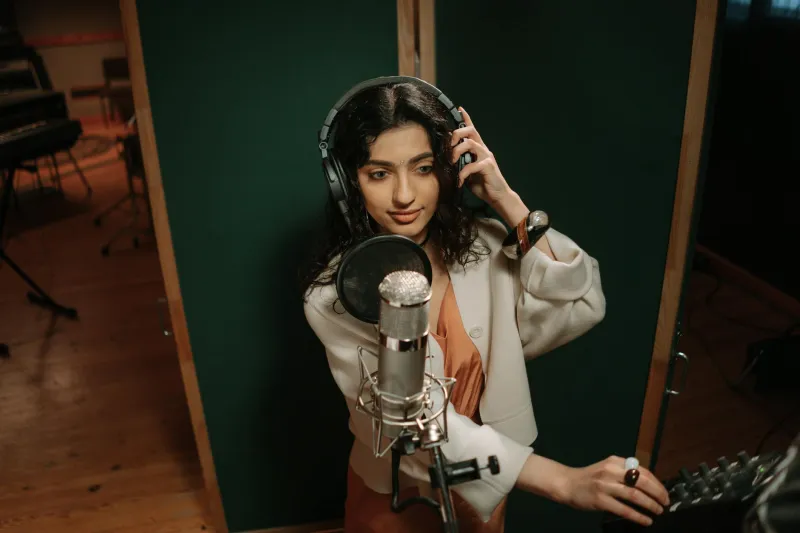
In a soundproof chamber beneath a Victorian railway station in King's Cross, Julie Morrison holds a pair of size-nine brogues above a tray filled with broken biscuits. She's not preparing an unusual breakfast—she's crafting the footsteps that will carry viewers through the cobblestone streets of a period drama destined for BBC One. Each step must convey character, mood, and narrative weight through nothing more than the precise manipulation of leather against crumb.
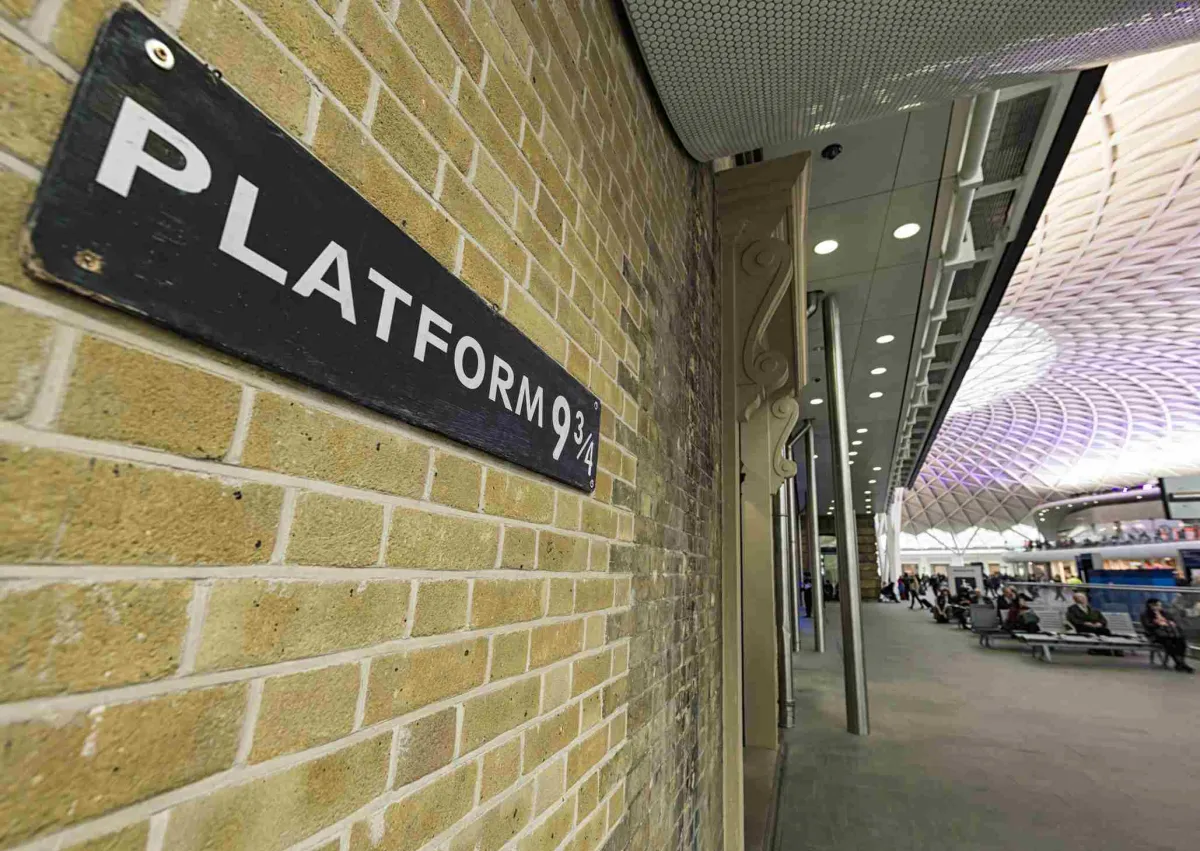 Photo: King's Cross, via www.tripsavvy.com
Morrison belongs to Britain's most invisible artistic community: the Foley artists who hand-craft every ambient sound that audiences experience but never consciously notice. Named after Jack Foley, the American sound pioneer who developed many foundational techniques in the 1920s, this craft has evolved into something uniquely British, shaped by decades of BBC innovation and the particular acoustic demands of our damp, densely built island.
"People assume everything is computer-generated now," Morrison explains, selecting a different pair of shoes for the next scene. "But algorithms cannot replicate the infinite variations of human movement, the way fabric rustles differently when someone is nervous versus confident, the subtle acoustic signature of authentic materials interacting with real environments."
The Archaeology of Sound
Britain's Foley tradition emerged from the BBC's legendary Radiophonic Workshop, where engineers and artists developed techniques for creating realistic sound effects using whatever materials came to hand. During the Second World War, when importing exotic sound libraries proved impossible, British radio producers became masters of sonic improvisation—a tradition that continues to define the craft's distinctive character.
At Shepperton Studios, master Foley artist David Whitaker maintains what amounts to an archaeological collection of sound-making materials. His workshop resembles a Victorian inventor's laboratory crossed with a jumble sale: vintage typewriters for creating the clatter of telegraph keys, collections of period shoes organised by decade, boxes of gravel sorted by grain size and geological origin.
"Each material has its own acoustic fingerprint," Whitaker explains, running his fingers through a box of Victorian shirt buttons. "These buttons, cast from horn rather than plastic, create a completely different timbre when they touch. For period accuracy, we need period materials. Digital samples cannot capture the complex harmonics of authentic textures."
Whitaker's most prized possession is a collection of floorboards salvaged from buildings across Britain, each representing a different era and construction technique. Georgian oak creates a distinctly different footfall than Victorian pine or Edwardian mahogany. For historical dramas, such details prove crucial to maintaining acoustic authenticity.
The Choreography of Everyday Life
Foley work demands a peculiar form of physical performance. Artists must embody characters through movement alone, translating actors' emotional states into precise sonic representations. A confident stride requires different timing and pressure than a nervous shuffle. Fear changes the way clothing moves against skin. Love affects breathing patterns in ways that microphones detect but audiences process subconsciously.
"We're method actors for sound," explains Catherine Wells, whose career spans four decades of British television production. "When I'm creating footsteps for a character, I need to understand their psychology, their physical condition, their relationship to the environment. Are they wearing shoes that fit properly? Are they comfortable in this social situation? All of these factors affect the acoustic signature."
Wells demonstrates by walking the same path three times, each with subtly different posture and intention. The resulting sounds—captured by sensitive microphones positioned at precise angles—tell completely different stories despite covering identical ground. The first walk suggests confidence and purpose. The second conveys hesitation and uncertainty. The third implies stealth and possible malicious intent.
The Material Library
Modern Foley studios resemble surreal museums dedicated to the textures of human experience. At London's De Lane Lea Studios, senior artist Mark Stevens maintains what he calls "the library of everything"—a vast collection of materials organised not by logical categories but by their sonic potential.
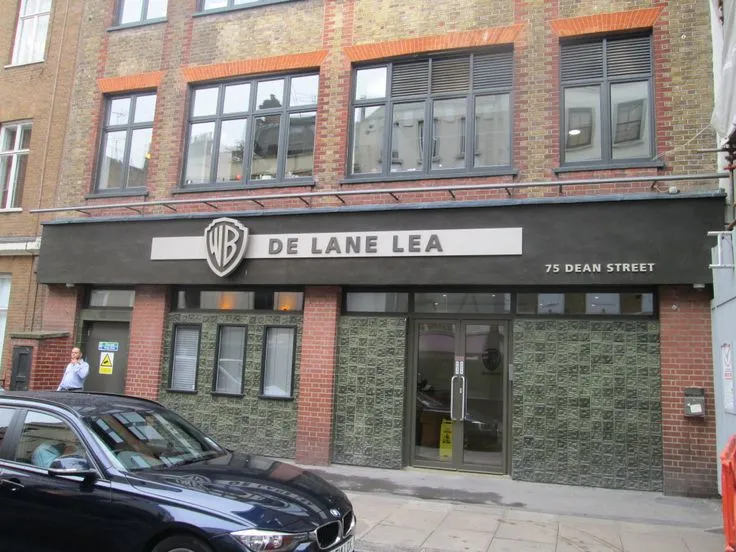 Photo: De Lane Lea Studios, via i.pinimg.com
Leather samples from different animals create distinct rustling patterns. Synthetic fabrics behave differently than natural fibres when subjected to movement and friction. Even seemingly identical materials can produce vastly different sounds depending on their age, treatment, and environmental exposure.
"This jacket," Stevens says, indicating a worn tweed coat hanging among hundreds of others, "belonged to a gentleman from the Cotswolds who wore it for thirty years of country walks. The leather has developed a particular patina, the tweed has acquired specific wear patterns. When actors wear it in scenes, it tells a story through sound alone—the story of a life lived outdoors, of material shaped by experience."
The studio's props department extends beyond clothing to encompass every conceivable object that might appear in British productions. Period-appropriate door handles, each with distinct mechanisms and acoustic signatures. Collections of crockery spanning centuries of ceramic innovation. Even different types of paper, from medieval parchment to modern newsprint, each creating unique sounds when handled.
Digital Resistance
In an era when computer-generated imagery dominates visual effects, Foley artists represent one of cinema's last analogue crafts. While digital sound libraries offer convenience and cost savings, they cannot replicate the infinite subtlety of real materials interacting with real environments under real physical laws.
"Digital samples are like photographs of sounds," argues Tony Harrison, who has worked on productions ranging from Four Weddings and a Funeral to recent Netflix series. "They capture a moment, but they lack the dynamic range of live performance. When an actor moves unexpectedly during filming, I can respond in real-time, adjusting the sound to match their performance. A digital sample cannot improvise."
This responsiveness proves particularly crucial for British productions, which often favour naturalistic performances over heavily choreographed action. British actors' tendency toward subtle, understated delivery requires equally nuanced sound design—something that only live Foley performance can provide.
The Apprenticeship Tradition
Unlike many contemporary crafts, Foley artistry cannot be learned through formal education. Instead, it perpetuates through traditional apprenticeships, with masters passing techniques to selected proteges over periods spanning years or even decades.
"There's no textbook for creating the sound of Georgian silk rustling against whale-bone corsetry," explains apprentice Sarah Chen, who has spent three years learning from veteran artist Margaret Thornberry. "These techniques exist only in the hands and ears of practitioners. When a master retires without training successors, entire categories of knowledge disappear forever."
The apprenticeship process involves not just technical training but cultural education. Apprentices must develop intimate knowledge of British social history, understanding how different classes, professions, and regions would have sounded during various historical periods. They study architecture, fashion, and material culture to understand how environmental factors influence acoustic properties.
The Economics of Authenticity
Despite their crucial contribution to British media production, Foley artists operate within increasingly constrained economic circumstances. Digital alternatives offer apparent cost savings, whilst shrinking production budgets pressure studios to embrace automated solutions over hand-crafted artistry.
"We're often the first budget cut and the last consideration," admits freelance artist Robert Davies, whose client list includes major British broadcasters and independent production companies. "Commissioners understand the importance of good sound design in principle, but they struggle to justify the expense when digital alternatives appear adequate."
Yet certain productions continue to demand authentic Foley work, particularly period dramas and prestige projects where acoustic authenticity contributes to overall production values. The recent success of series like The Crown and Bridgerton has reminded producers that audiences, while not consciously aware of sound design, respond powerfully to authentic acoustic environments.
The Future of Handmade Sound
As Julie Morrison completes her work on the period drama's cobblestone sequence, she reflects on her craft's uncertain trajectory. "We're guardians of something irreplaceable," she observes, carefully returning the biscuit-filled tray to its designated storage location. "Every sound we create carries the DNA of human performance, of real materials behaving according to physical laws. That authenticity resonates with audiences in ways that digital approximations cannot match."
The challenge facing Britain's Foley community extends beyond mere economic survival to encompass cultural preservation. These artists maintain not just technical skills but cultural memory—the knowledge of how Britain has sounded throughout its history, from the clip-clop of horses on Victorian cobbles to the distinctive acoustic signature of Blitz-era air raid shelters.
In their converted warehouses and purpose-built studios, surrounded by the detritus of centuries of material culture, Britain's Foley artists continue their invisible orchestration of our collective auditory imagination. They remain the sonic archaeologists of our mediated experiences, ensuring that the sounds of our stories retain the irreplaceable authenticity of human craft in an increasingly digital world.