The New Geography of Making
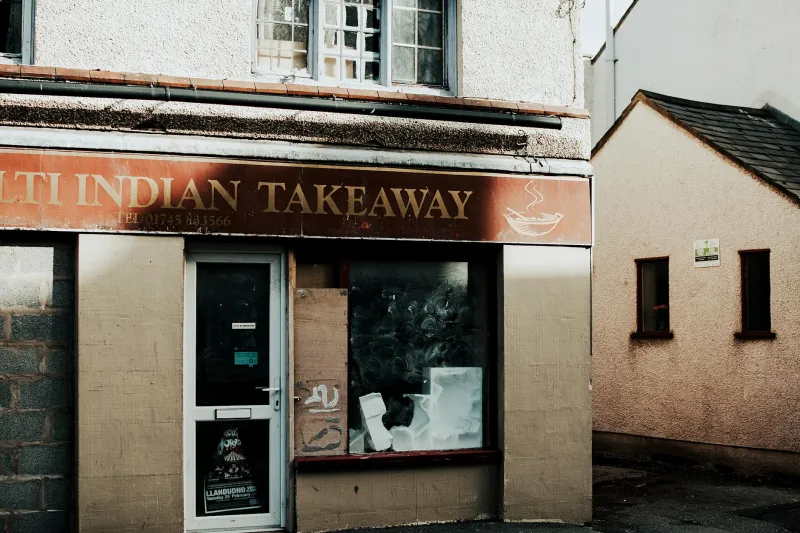
The former Dixons shop on Grimsby's Victoria Street has been empty for eighteen months, its windows papered with estate agent details that promise "prime retail opportunity" to increasingly sceptical audiences. But step through the unmarked side door, and you'll discover something unexpected: a thriving artist's studio where painter Michael Cartwright has spent the past year creating large-scale canvases that explore post-industrial decline through abstract colour studies.
Cartwright pays £200 per month for 1,500 square feet of space that would cost ten times as much in London. His landlord, who owns six empty retail units on the same street, prefers temporary artist tenants to the security costs and business rates associated with vacant commercial property. It's an arrangement replicated across Britain's struggling high streets, from Middlesbrough to Merthyr Tydfil, as creative practitioners and pragmatic property owners forge unlikely alliances.
The Economics of Creative Opportunism
Britain's retail apocalypse has created an unexpected cultural dividend. Since 2010, over 40,000 shops have closed permanently, leaving vast swathes of commercial space available at rates that make creative occupancy economically viable. Unlike the traditional artist studio model—purpose-built spaces in industrial areas—these high street residencies place creative practice at the geographic heart of communities.
"We're not talking about gentrification in the traditional sense," argues Dr. Rebecca Foster, an urban geographer at Lancaster University who studies creative economies in post-retail environments. "These aren't trendy neighbourhoods attracting middle-class pioneers. These are economically devastated areas where artists represent one of the few growth sectors."
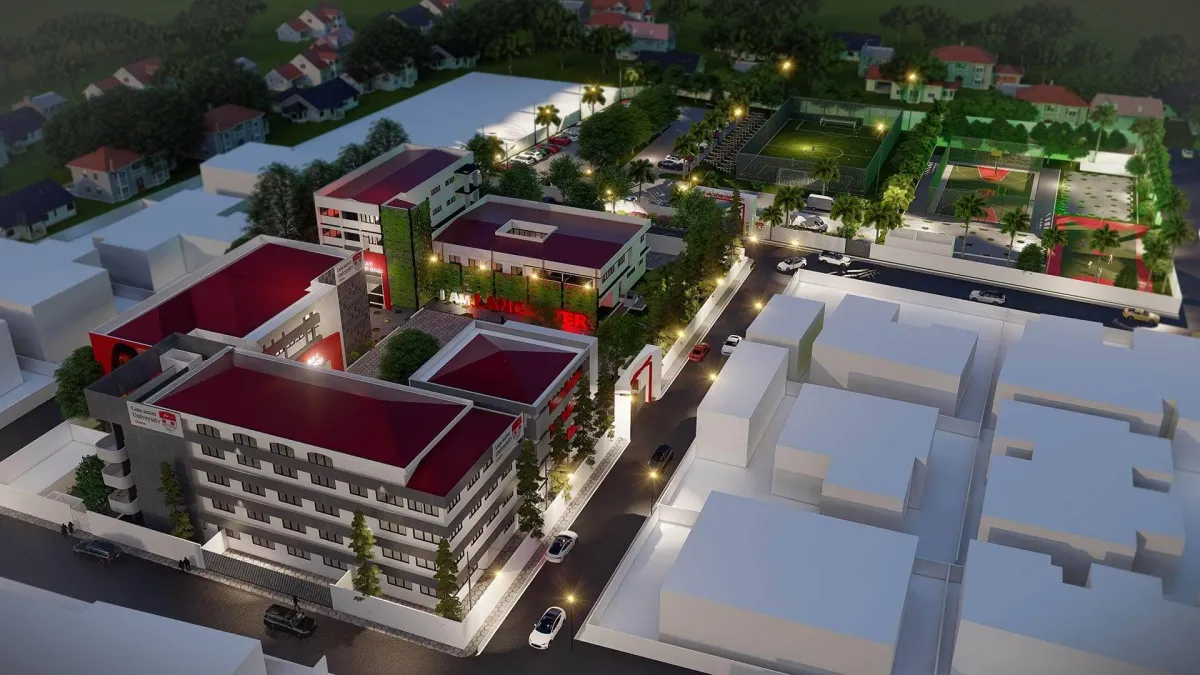 Photo: Lancaster University, via spektra.global
The financial arrangements vary significantly. In Blackpool, sculptor Jenny Morrison has negotiated a rent-free arrangement in exchange for maintaining building security and providing public access to her studio twice weekly. In Rhyl, the local council actively recruits artists to occupy empty units, offering six-month leases at nominal rents as part of broader regeneration strategies.
From Consumption to Creation
The spatial transformation of retail environments into creative workshops requires significant adaptation. Former clothing shops lack the electrical infrastructure for ceramics kilns, while ex-electronics retailers need sound insulation for music production. These practical challenges have fostered innovative solutions and cross-disciplinary collaboration.
In Stoke-on-Trent's Hanley district, five artists share a former BHS department store, subdividing the space according to medium-specific requirements. Sculptor David Chen works near the loading bay, taking advantage of vehicle access for large installations, while sound artist Priya Kumar occupies the former changing rooms, utilising their acoustic isolation for recording work.
The visual transformation can be striking. Where once fluorescent lighting illuminated mass-produced commodities, natural light now reveals work-in-progress paintings and sculptural experiments. Former shop windows become informal galleries, attracting pedestrian attention in ways that purpose-built studios cannot match.
Community Integration or Cultural Colonisation?
The relationship between artist residents and existing communities remains complex and contested. Critics argue that creative practitioners, however well-intentioned, represent a form of cultural colonisation that prioritises aesthetic intervention over economic development. Local councillors in Rotherham sparked controversy by suggesting that artist studios contribute little to employment or tax revenue compared to traditional retail businesses.
However, many practitioners actively engage with community development. In Burnley, photographer Lisa Thompson runs free portrait sessions for local residents, gradually building an archive of contemporary working-class life. Her former Argos unit has become an informal community centre where pensioners discuss local history while Thompson documents their stories.
"The question isn't whether artists deserve these spaces more than retailers," Thompson explains. "The question is what happens to communities when commercial activity disappears entirely. We're trying to create alternative forms of social and economic value."
The Landlord Perspective
Property owners' motivations for accommodating artist tenants extend beyond altruistic community support. Empty retail units incur significant costs—business rates, security, maintenance—while generating no income. Artist tenants, even paying minimal rents, provide building occupation that reduces insurance costs and vandalism risks.
Sarah Mitchell, who owns twelve retail units across Wolverhampton's struggling city centre, has housed artists in seven of them over the past three years. "I'd rather have someone creating something beautiful than deal with broken windows and graffiti," she explains. "The artists look after the spaces better than most commercial tenants did."
Some landlords have developed more sophisticated approaches. In Sunderland, property developer James Harrison has created formal "creative quarters" in former shopping centres, offering subsidised rents to artists in exchange for public access commitments and collaborative programming with local schools.
The Gentrification Question
The spectre of gentrification haunts discussions about artists in post-retail spaces, though the dynamics differ significantly from classic patterns observed in London or Brooklyn. Most affected areas lack the housing stock or transport links that typically attract middle-class settlement, while local property values remain too low to generate significant development pressure.
Nonetheless, some communities express concern about cultural displacement. In Blackburn, long-term residents worry that artist studios signal the beginning of demographic change that will eventually price out existing populations. These fears reflect broader anxieties about economic transformation in areas that have experienced decades of disinvestment.
Urban planner Dr. Mark Stevens suggests that the key lies in ensuring artist residencies serve existing communities rather than replacing them. "The question is whether these creative interventions strengthen local social networks or operate as parallel systems that ignore existing residents," he argues.
Policy Implications and Future Directions
Local authorities increasingly recognise creative occupancy as a legitimate interim use strategy for struggling retail areas. Manchester City Council has developed formal protocols for facilitating artist residencies, including simplified planning procedures and reduced bureaucratic barriers. Similar initiatives in Liverpool and Newcastle suggest growing policy acceptance of creative interim use.
However, the temporary nature of most arrangements creates uncertainty for long-term artistic development. Few artists can invest in significant studio improvements or expensive equipment when facing potential eviction at short notice. Some councils are experimenting with longer-term creative leases that provide greater security while maintaining flexibility for future commercial development.
The Cultural Value of Economic Failure
Perhaps the most profound impact of this movement lies in its challenge to conventional assumptions about urban success and failure. Areas dismissed as economically unviable may prove culturally generative, while the absence of commercial pressure enables experimental practices that thriving retail environments couldn't accommodate.
In Hartlepool, installation artist Emma Rodriguez has created large-scale works exploring themes of industrial decline using materials salvaged from the surrounding area. Her former Comet electrical store has become an informal museum of regional economic history, attracting visitors from across the North East who recognise their own experiences reflected in her work.
"People assume these places are dead because the shops have closed," Rodriguez observes. "But death and decay can be incredibly fertile for artistic creation. We're not trying to resurrect the past—we're composting it into something new."
As Britain's retail landscape continues its structural transformation, these artist-occupied spaces offer glimpses of possible post-commercial futures. Whether they represent genuine community regeneration or aesthetic window-dressing for economic decline remains an open question, one that will be answered not by policy makers or property developers, but by the communities themselves.