The Invisible Orchestra
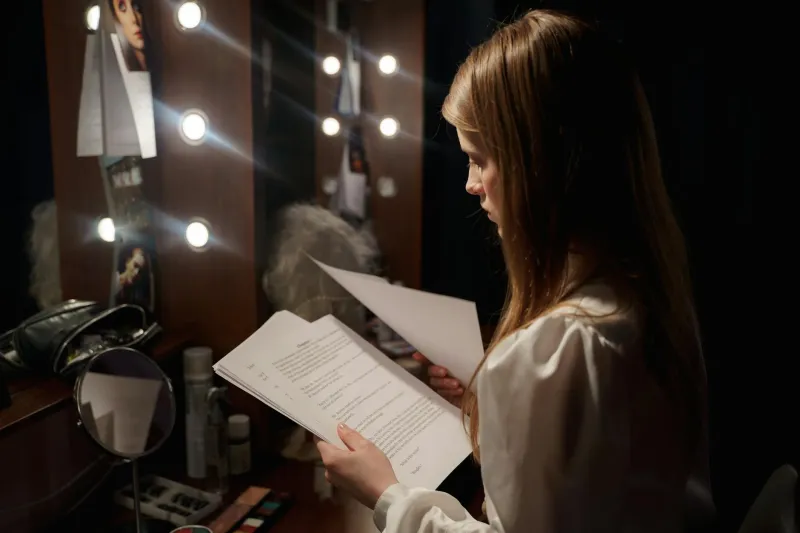
In the wings of the Lyric Theatre Hammersmith, Margaret Thornley sits in near-darkness, her eyes trained simultaneously on three different scripts. One bears the original text of Chekhov's 'Three Sisters', another contains the director's cuts and amendments, and the third—covered in her own meticulous annotations—maps every pause, breath, and potential stumble of the evening's performance. At seventy-three, Thornley is one of Britain's last professional theatrical prompters, a guardian of an art form that has quietly sustained British theatre for over four centuries.
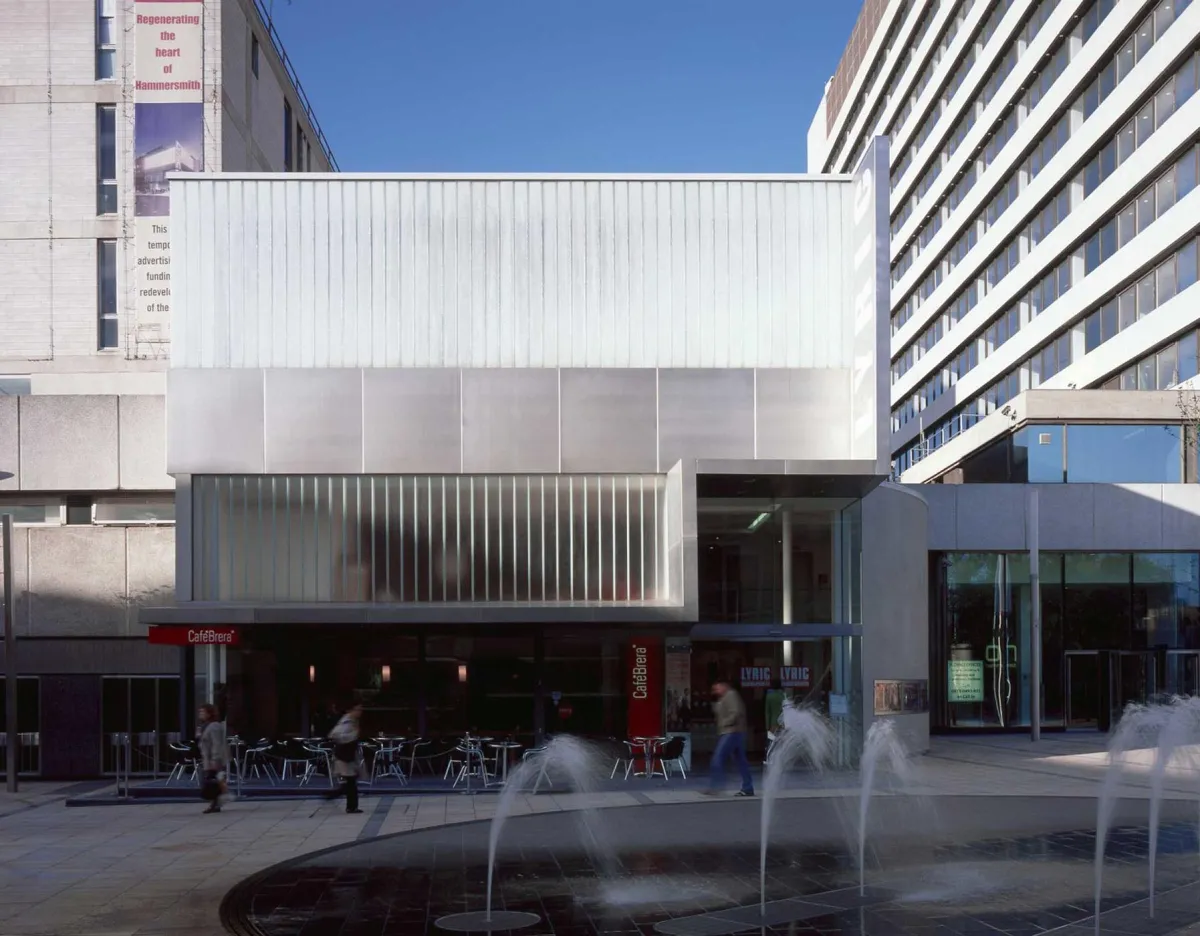 Photo: Lyric Theatre Hammersmith, via micaarchitects.com
"People think prompting is about catching actors when they forget their lines," Thornley explains during the interval, her voice barely above a whisper despite the empty auditorium. "But that's perhaps five percent of what we do. We're the theatre's memory, its conscience, its safety net. We hold the entire production in our heads so everyone else can focus on their individual contributions."
Tonight marks Thornley's 47th year as a prompter, a career that began in 1976 at the Bristol Old Vic and has taken her through the regional theatre circuit, the West End, and numerous international productions. She may also be among the last of her kind.
The Disappearing Craft
The role of the theatrical prompter—known in some traditions as the book-keeper or script supervisor—emerged in the 16th century alongside professional theatre itself. By the Victorian era, every respectable theatre company employed at least one prompter, often a veteran actor or director who could guide younger performers and maintain artistic continuity across long runs.
Today, the Equity union estimates fewer than thirty professional prompters remain active across British theatre. Budget constraints, shorter rehearsal periods, and changing directorial philosophies have conspired to eliminate a role once considered essential to theatrical production.
"The economics are brutal," admits James Whitfield, artistic director of the Octagon Theatre Bolton, one of the few regional venues still employing a dedicated prompter. "We're talking about £300-500 per week for someone who sits in the corner and occasionally whispers a word or two. From a spreadsheet perspective, it's impossible to justify."
Yet Whitfield argues that this purely financial calculation misses the broader cultural value of the prompter tradition. "When you eliminate the prompter, you're not just cutting a salary line. You're fundamentally altering the ecosystem of theatrical production."
The Keeper of Secrets
To understand what's being lost, one must appreciate the prompter's true function within theatrical hierarchy. Far from merely correcting forgotten lines, the prompter serves as the production's institutional memory, maintaining continuity across cast changes, tracking the evolution of directorial decisions, and preserving the delicate balance of timing that separates professional theatre from amateur dramatics.
Robert Cavendish, who prompted for the Royal Shakespeare Company for over two decades before his retirement in 2019, describes the role as "part librarian, part therapist, part air traffic controller." His meticulously kept prompt books—now housed in the Theatre Museum's archives—reveal the complexity of the craft: detailed notes on lighting cues, sound effects, prop placements, and the subtle rhythmic patterns that give each production its unique pulse.
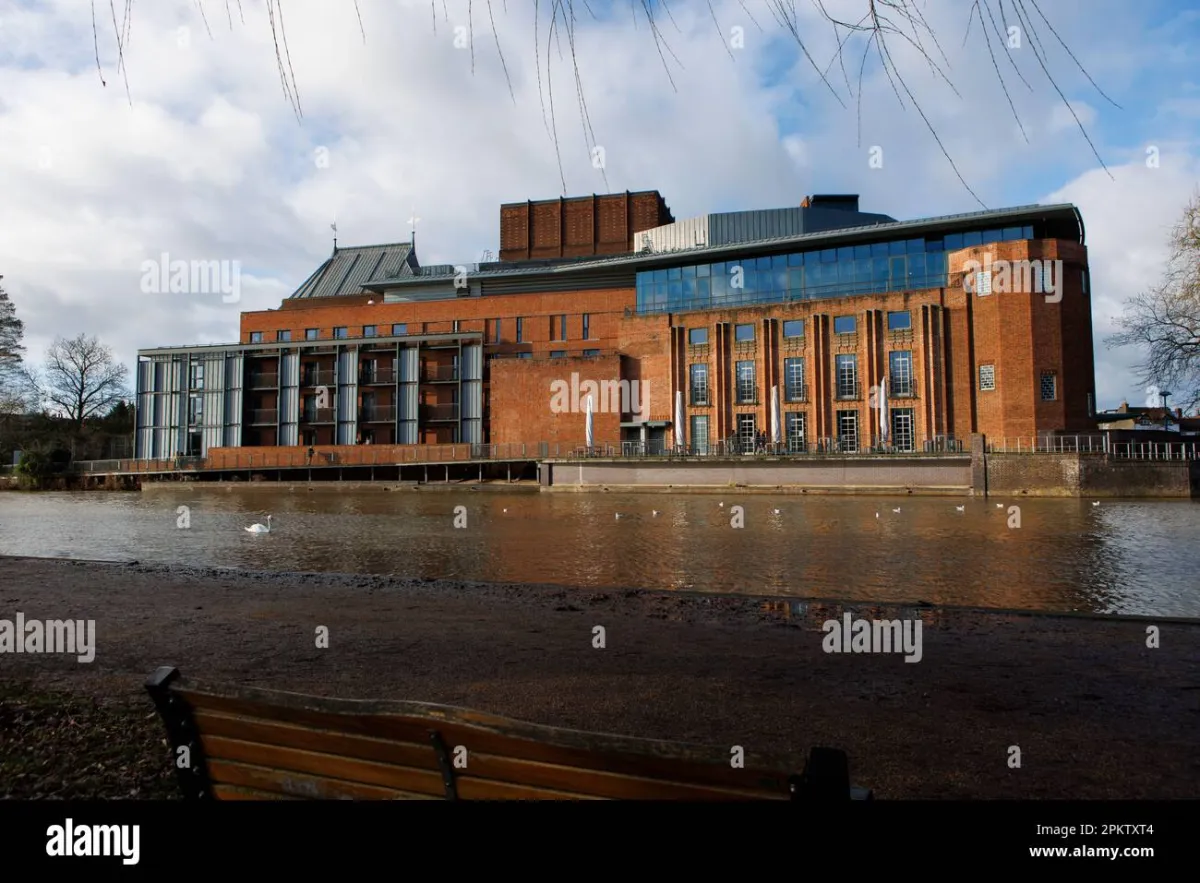 Photo: Royal Shakespeare Company, via c8.alamy.com
"Every production develops its own breathing pattern," Cavendish explains from his cottage in Stratford-upon-Avon, surrounded by decades of prompt books. "The prompter learns that pattern so intimately that we can sense when something's wrong before anyone else notices. We feel the production's health in real time."
This sensitivity to theatrical rhythm becomes particularly crucial during long runs, when actors may unconsciously alter their performances or when cast changes threaten to disrupt carefully calibrated ensemble work. The prompter serves as a stabilising force, gently maintaining the production's original intention whilst allowing for organic evolution.
The Training Grounds
Recognising the tradition's precarious state, several British institutions have quietly implemented programmes to preserve prompting skills. The Royal Academy of Dramatic Art now offers an optional module in prompt book creation, whilst the Central School of Speech and Drama has integrated prompting training into its stage management curriculum.
"We're not training professional prompters," clarifies RADA's head of production studies, Patricia Melbourne. "The commercial reality is that those jobs barely exist anymore. But we're ensuring that future theatre practitioners understand what prompting represented and can apply those skills in contemporary contexts."
At the Bristol Old Vic Theatre School—where Margaret Thornley began her career—a small group of students meet weekly with retired prompter Eleanor Walsh to learn the traditional craft. The sessions, held in a cramped rehearsal room overlooking King Street, feel like archaeological expeditions into theatre's recent past.
"It's about attention," Walsh explains to her students as they practice following a scene from 'The Tempest'. "Not just paying attention, but holding attention. You must contain the entire production in your consciousness whilst remaining completely invisible."
The students—most destined for careers in directing, producing, or arts administration—often struggle with the prompter's fundamental paradox: maintaining absolute focus whilst exercising supreme restraint. The best prompters, Walsh explains, are those who never need to prompt at all.
Underground Preservation
Whilst mainstream theatre increasingly abandons the prompter tradition, several fringe companies and experimental groups have embraced it as both practical necessity and artistic statement. The London-based collective Theatre of Whispers builds prompting into their performances as a visible element, exploring themes of memory, authority, and collective creation.
"We're interested in what happens when you make the prompter part of the dramaturgy," explains the company's co-founder, David Chen. "Instead of hiding this figure who holds the production's truth, we place them centre stage. It becomes a meditation on how stories are preserved and transmitted."
Similarly, the Manchester-based New Elizabethan Players—a company dedicated to performing early modern drama with period-appropriate staging techniques—employs traditional prompting methods as part of their commitment to historical accuracy. Their prompter, seated at a small desk beside the stage, follows the text with a wooden pointer and occasionally calls out corrections in full view of the audience.
"It's not about nostalgia," insists the company's artistic director, Sarah Williams. "These techniques evolved for good reasons. When you're performing in natural light, with minimal rehearsal time, using unfamiliar language, the prompter becomes absolutely essential. Modern theatre has forgotten how valuable that safety net can be."
The Philosophical Stakes
For the remaining practitioners, the decline of prompting represents more than professional obsolescence—it signals a fundamental shift in how British theatre conceives of collaboration and artistic responsibility. The traditional prompter embodied an older model of theatrical production, one based on collective memory and shared guardianship of the artistic vision.
"When you eliminate the prompter, you're essentially saying that each performer is responsible only for their own contribution," argues Thornley. "But theatre isn't a collection of individual performances—it's a living organism that requires constant tending. The prompter was that tender."
This philosophical dimension has attracted attention from theatre scholars and cultural historians. Dr. Helena Morrison of the University of Edinburgh, currently writing a book on disappearing theatrical crafts, argues that the prompter's decline reflects broader anxieties about authority, memory, and collective responsibility in contemporary British culture.
"The prompter represented a particular kind of institutional knowledge," Morrison observes. "They embodied the idea that some things are too important to risk forgetting, that cultural transmission requires dedicated guardians. When we eliminate that role, we're making a statement about what we value and what we're willing to lose."
Echoes in Empty Spaces
As Margaret Thornley prepares for what may be her final season at the Lyric Hammersmith, she reflects on a career spent in the shadows of British theatre. Her prompt books—hundreds of them, chronicling decades of productions—will join the archives at the V&A Theatre Collections, where they'll serve as testament to a vanished craft.
"I've watched thousands of performances," she muses, "and I can tell you that the best moments happen when everyone forgets I'm there. That's when the magic occurs—when the prompter becomes invisible, the actors trust completely, and the story takes on its own life."
The irony is not lost on her that this invisibility, once the prompter's greatest strength, may have hastened the tradition's demise. In an era of celebrity culture and individual achievement, there's little glamour in being theatre's most essential invisible presence.
Yet for those who understand the craft, the prompter's legacy endures in every successful production, every seamless performance, every moment when live theatre transcends its component parts to become something larger and more lasting. The whispered guardians may be departing, but their influence echoes in the empty spaces they leave behind, reminding us of what it means to hold a story sacred.