The Alchemy of Illusion
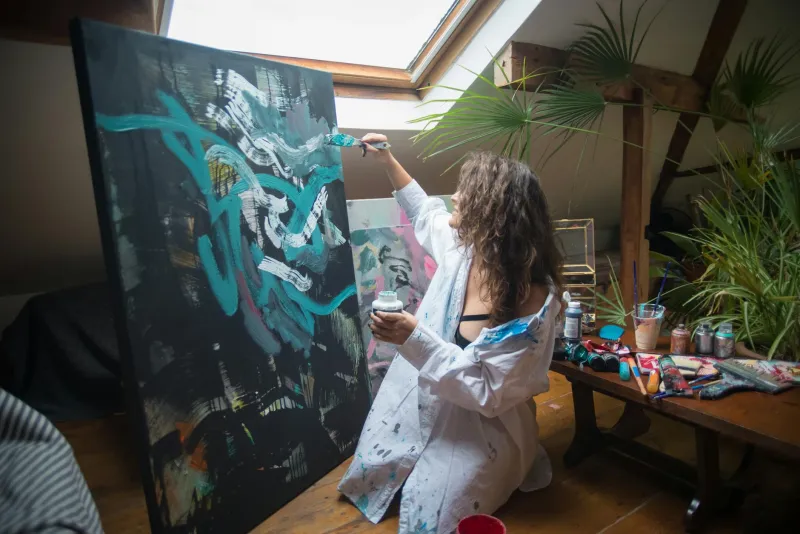
Beneath a railway arch in Bermondsey, sixty-three-year-old Margaret Thornton wields a brush the size of a cricket bat, sweeping cerulean blue across a canvas that stretches twenty feet in either direction. The backdrop destined for the National Theatre depicts a storm-lashed coastline—every wave crest, every cloud formation rendered with a precision that would make the Pre-Raphaelites weep. Yet Thornton works with the urgency of a woman racing against extinction.
 Photo: Margaret Thornton, via images.squarespace-cdn.com
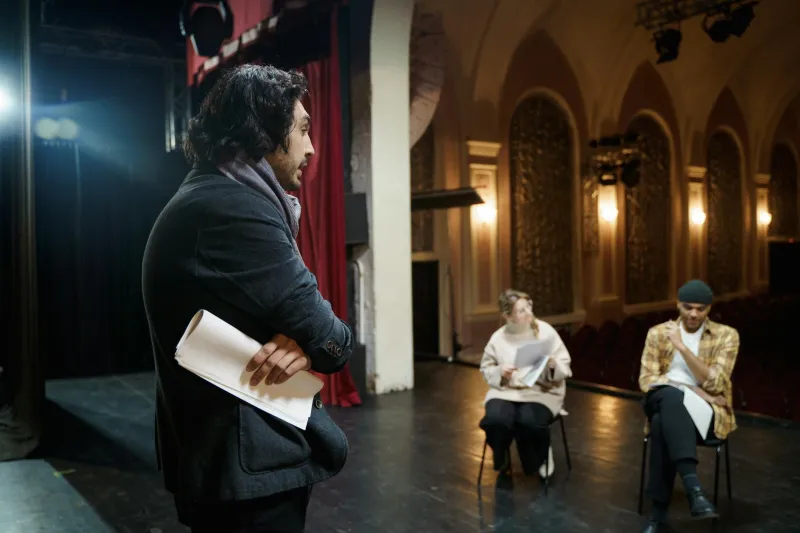
 Photo: National Theatre, via images.nationaltheatre.org.uk
"Digital projection can create any image imaginable," she admits, pausing to examine a particularly stubborn patch of sky. "But it cannot replicate the soul of paint on canvas, the way light catches the brushstrokes, the subtle imperfections that make a scene breathe."
Thornton represents the final generation of Britain's theatrical scenic painters, inheritors of a craft that has illuminated British stages since the 18th century. Her studio, shared with three other artists, resembles an alchemist's laboratory more than a conventional workspace. Buckets of size—a glutinous mixture of rabbit skin glue and water—bubble on gas rings. Pigments imported from Florence and Prague line makeshift shelves. The air hangs thick with the scent of linseed oil and ambition.
Masters of the Impossible
The scenic painter's art demands a peculiar form of genius. Working from designers' sketches and scale models, they must translate intimate concepts into backdrops that will be viewed from distances of up to one hundred feet. Perspective becomes everything; what appears correct up close may prove disastrous under stage lights.
"We paint for the gods in the gallery," explains James Whitworth, whose grandfather painted sets for the original production of The Mousetrap. "Every brushstroke must read from the back row of the upper circle. It's architectural painting, really—we're creating buildings that exist only in two dimensions."
Whitworth's current commission—a trompe-l'oeil palace interior for a touring production of Hamlet—demonstrates the complexity of the craft. What appears to be carved marble columns and gilded cornicing is actually layers of paint applied with techniques unchanged since the Renaissance. Base coats establish form, glazes create depth, and final details add the illusion of three-dimensional space.
The physical demands prove as challenging as the artistic ones. Scenic painters work on floors, crouched over vast canvases, their bodies contorted to maintain perspective. Many suffer from chronic back problems and paint-stained hands that never quite come clean. The work is seasonal, tied to theatre schedules, offering little security or recognition.
The Digital Siege
Modern theatre increasingly favours digital projection, which offers infinite flexibility at a fraction of the cost. A single projector can display dozens of different scenes, morphing seamlessly from forest to castle to abstract dreamscape. The technology has revolutionised musical theatre in particular, where spectacle often trumps subtlety.
"I understand the economics," concedes Sarah Chen, whose family has run a scenic painting workshop in Manchester for four generations. "A digital backdrop costs perhaps £5,000 to create and can be used indefinitely. A hand-painted canvas of similar size might cost £25,000 and serves only one production."
Yet Chen argues that projection creates a fundamental disconnect between performer and environment. "Actors relate differently to painted scenery," she insists. "There's a tangible quality, a presence that digital images simply cannot match. When Laurence Olivier performed Othello, he was acting against real paint, real texture. That matters."
Guardians of Tradition
The Royal Opera House maintains perhaps Britain's last great scenic painting department, a cathedral-like space where craftsmen still mix their own pigments according to formulas dating back centuries. Master painter David Hockney—not the famous artist, but his lesser-known namesake—oversees a team of six painters responsible for maintaining the company's vast collection of historical backdrops.
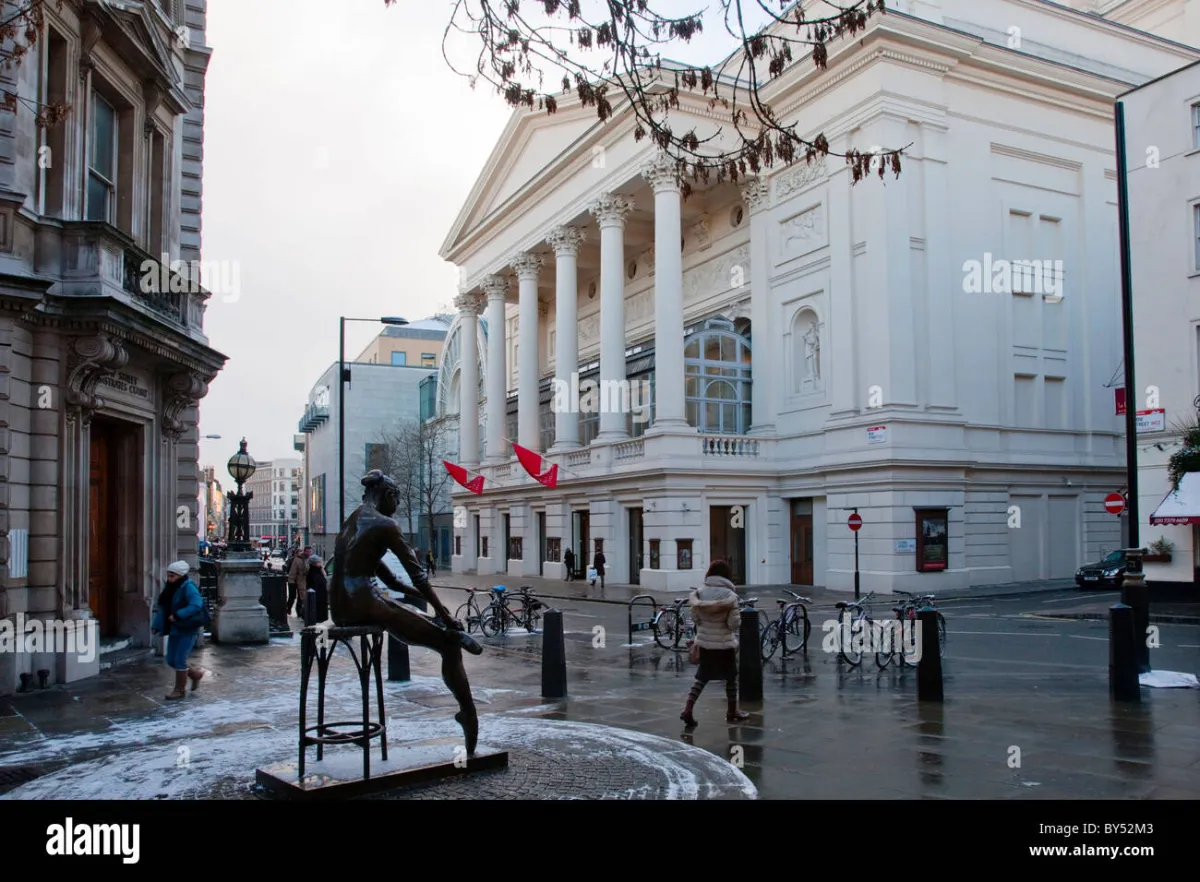 Photo: Royal Opera House, via c8.alamy.com
"We're not just painters," Hockney explains, indicating a backdrop from the 1890s that requires careful restoration. "We're conservators, historians, detectives. Each canvas tells the story of British theatre, of changing tastes and techniques. When we lose this knowledge, we lose part of our cultural DNA."
The department's apprenticeship programme, one of only three remaining in Britain, takes seven years to complete. Apprentices begin by learning to stretch canvas and mix size, progressing through increasingly complex techniques until they can independently create full-scale productions.
The Economics of Artistry
The financial pressures facing scenic painters reflect broader challenges within British theatre. Arts Council funding cuts have forced many companies to embrace cheaper alternatives, whilst rising property costs have displaced traditional workshops from central London locations.
"My father's generation could afford studios in Covent Garden," reflects painter Thomas Bramwell, now based in a converted warehouse in Luton. "We've been pushed further and further out, making collaboration with designers and directors increasingly difficult."
Yet some younger practitioners see opportunity within constraint. Emma Rodriguez, who trained at the Slade before specialising in scenic art, has pioneered techniques that combine traditional painting with modern materials. Her backdrops incorporate LED strips and reflective pigments that respond to changing light, creating effects impossible with either pure painting or digital projection.
The Stubborn Persistence of Craft
Despite technological pressures, certain productions continue to demand hand-painted scenery. Period dramas, in particular, benefit from the authentic textures and patina that only paint can provide. The recent revival of The Lion, the Witch and the Wardrobe at the Bridge Theatre featured entirely hand-painted sets, their organic quality perfectly complementing the production's emphasis on storytelling over spectacle.
"There's an honesty to painted scenery that audiences recognise, even if they can't articulate it," argues theatre critic Jonathan Mills. "In an age of digital saturation, the handmade carries particular power. It connects us to the traditions that define British theatre."
As Margaret Thornton applies the final touches to her storm-swept coastline, she reflects on her craft's uncertain future. "Perhaps we are dinosaurs," she muses, "but dinosaurs once ruled the earth. And sometimes, in the right light, with the right story, we rule the stage as well."
The brush continues its ancient dance across canvas, defying obsolescence one stroke at a time.