The Morning Canvas
At half past six on a drizzly Manchester morning, Lucy Hartwell kneels on the wet pavement outside Pollen Bakery, a stick of chalk poised above the dark slate board that will soon advertise the day's specials. The early hour isn't just about beating the crowds—it's about catching the light just right, understanding how the morning sun will illuminate each carefully formed letter, how the shadows will fall across her ornate flourishes.
"People think it's just writing on a board," she says, sketching out guidelines with practiced precision. "But every surface is different. This slate drinks up moisture differently than the reclaimed wood board at the florist next door. The chalk responds differently. The letters need to breathe differently."
Hartwell is part of a quietly revolutionary movement that's transforming Britain's high streets one chalkboard at a time. These aren't casual café scribbles or hastily written price lists, but sophisticated works of typographic art that blend commercial function with genuine aesthetic ambition. From the ornate Victorian-inspired lettering adorning Edinburgh's independent bookshops to the bold geometric designs that front London's craft breweries, chalk sign art has evolved into a legitimate creative discipline.
The Craft Behind the Commerce
The renaissance of blackboard artistry represents more than nostalgic aesthetics. In an era of digital saturation and algorithmic advertising, the hand-drawn sign offers something increasingly rare: authenticity that can't be replicated or mass-produced. Each board carries the subtle imperfections that mark human creation—the slight variation in letter spacing, the organic flow of connecting strokes, the evidence of the artist's breathing rhythm in the line quality.
Tom Kemp discovered this truth accidentally. A former graphic designer made redundant during the 2008 recession, he began offering chalk sign services to local businesses in Brighton as a stopgap measure. Seven years later, his waiting list stretches three months ahead, and his Instagram account has become a masterclass in commercial lettering that attracts students from across Europe.
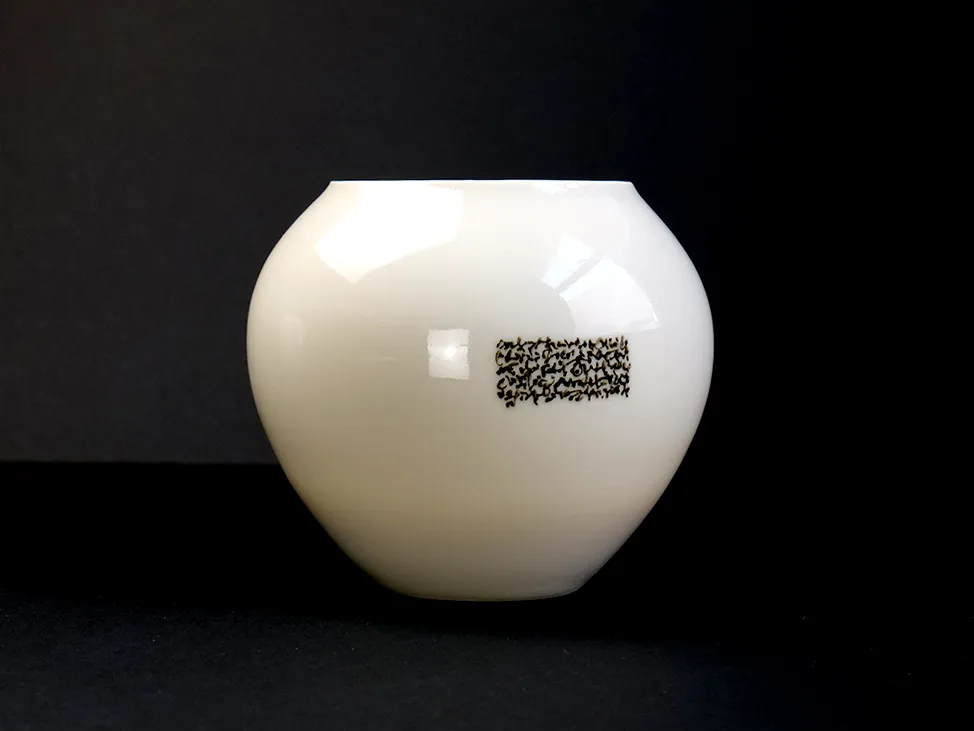 Photo: Tom Kemp, via potfest.co.uk
"Digital design taught me about typography, but chalk taught me about presence," Kemp explains, demonstrating the technique for creating perfectly consistent letter heights using nothing but trained muscle memory. "When you're working in pixels, you can undo mistakes infinitely. With chalk, every mark matters. That constraint forces you to be more intentional, more present in the moment of creation."
Kemp's work exemplifies the sophisticated level the craft has reached. His boards for local restaurants don't simply list menu items—they create atmospheric experiences that extend the venue's identity onto the street. A seafood restaurant receives flowing, wave-like letterforms that seem to move in peripheral vision. A traditional pub gets solid, confident strokes that evoke hand-painted Victorian pub signs. Each commission requires not just technical skill but cultural interpretation.
The Underground Network
What began as individual artists serving local businesses has evolved into a thriving community connected by social media, workshops, and an annual chalk art festival in Cornwall that attracts practitioners from across Britain. The #ChalkArt hashtag has become a repository of techniques, inspiration, and gentle competition, with artists sharing process videos that reveal the methodical approach behind apparently spontaneous creativity.
Sarah Mitchell runs monthly workshops from her studio in Newcastle, teaching everything from basic letter construction to advanced shading techniques. Her students range from small business owners wanting to improve their own signage to fine artists exploring the boundaries between commercial and gallery work.
"There's something democratic about chalk," Mitchell observes, watching a retired headteacher master the art of consistent curve construction. "The materials cost pennies, the basic techniques can be learned quickly, but the potential for sophistication is unlimited. It's accessible art that doesn't compromise on ambition."
The workshops reveal the technical complexity hidden within apparently simple letterforms. Students learn about optical letter spacing—the way the human eye perceives gaps between different letter combinations. They study the historical development of letter forms, understanding why certain styles convey authority while others suggest friendliness. Most importantly, they develop the muscle memory that allows consistent letter formation without conscious thought.
Ephemeral Urgency
The temporary nature of chalk work gives it an urgency that permanent signage lacks. Rain will wash away hours of careful work. Accidental contact can smudge a perfectly formed letter. This impermanence, rather than being a limitation, becomes the medium's greatest strength—each board represents a moment captured, a daily commitment to beauty that must be renewed rather than simply maintained.
Jenna Walsh's boards outside her Totnes café have become local landmarks, drawing visitors who time their walks to see her latest creations. Her work changes with the seasons, the weather, and her mood, creating an ongoing dialogue between artist, business, and community that no permanent sign could achieve.
"I've had people tell me they walk past just to see what's new," Walsh says, adding delicate leaf motifs to today's autumn-themed board. "That's engagement you can't buy. It's the opposite of banner blindness—people actively seek out the work because they know it's always changing, always handmade, always unique to this moment."
This temporal aspect has attracted fine artists who view chalk work as performance art that happens to serve commercial purposes. Several practitioners document their process through time-lapse photography, revealing the meditative rhythm of creation and the inevitable cycle of decay and renewal.
Economic Impact and Cultural Value
The commercial benefits of skilled chalk signage extend beyond aesthetic appeal. Independent businesses report increased foot traffic, longer customer dwell times, and enhanced brand perception when they invest in quality hand-drawn signage. The boards serve as conversation starters, social media content, and neighbourhood landmarks that create the kind of local character that chain stores struggle to replicate.
Dr. Rebecca Foster's research at Leeds University has documented the economic impact of artisanal signage on high street regeneration. Her study of twenty independent businesses found that those investing in quality chalk signage saw average revenue increases of 15% within six months, alongside improved customer loyalty and word-of-mouth marketing.
"The investment in craft signage signals something important about a business's values," Foster explains. "It suggests attention to detail, commitment to quality, and respect for traditional skills. In a marketplace where authenticity has become a premium commodity, these signals translate directly into commercial advantage."
The cultural impact extends beyond individual businesses to entire streetscapes. High streets featuring multiple chalk-art establishments develop a distinctive character that differentiates them from homogenised shopping centres and chain-dominated retail parks. The cumulative effect creates environments where browsing becomes discovery, where the act of shopping regains elements of serendipity and surprise.
Innovation Within Tradition
Contemporary chalk artists push the boundaries of their medium while respecting its essential character. LED backlighting transforms evening boards into glowing artworks. Protective coatings extend the life of particularly complex pieces. Some artists incorporate digital planning tools while maintaining hand-drawn execution, using tablets to test compositions before committing chalk to board.
Marcos Rodriguez has gained attention for his hybrid approach, combining traditional chalk techniques with contemporary design sensibilities. His boards for London's independent retailers feature bold geometric patterns that wouldn't look out of place in a gallery, yet retain the warmth and immediacy that makes chalk signage effective.
"I'm not trying to recreate Victorian pub signs," Rodriguez clarifies, demonstrating how he uses masking tape to create crisp geometric boundaries for his organic lettering. "I'm using chalk's unique properties—its texture, its relationship to light, its impermanence—to create something that couldn't exist in any other medium."
This innovation attracts younger practitioners who bring fresh perspectives to traditional techniques. Recent graduates from art schools increasingly view chalk signage as a legitimate career path, combining commercial viability with creative expression in ways that pure fine art careers rarely offer.
The Future of the Handmade
As Britain's high streets face unprecedented challenges from online retail and changing consumer habits, chalk sign artistry offers both practical solutions and symbolic resistance. The medium's emphasis on craft, locality, and human connection directly counters the algorithmic efficiency of digital commerce.
The movement has attracted support from unexpected quarters. Several local councils now offer grants for businesses investing in artisanal signage as part of high street regeneration initiatives. The Heritage Crafts Association has recognised chalk sign lettering as an endangered skill worthy of preservation and promotion.
Yet practitioners remain grounded in the daily reality of their craft. Each morning brings new challenges: boards to be cleaned, compositions to be planned, letters to be formed with the kind of attention that makes routine transcendent.
As Hartwell steps back to assess her morning's work—a flowing script that transforms "Fresh Sourdough Daily" into a small masterpiece of commercial poetry—early commuters begin to gather. Some pause to read, others photograph the board, but all engage with the work in ways that digital signage rarely achieves.
"Every board is a conversation," she reflects, cleaning her chalk-stained hands. "With the business, with the customers, with the street itself. That's something you can't automate, can't digitise, can't replace with an algorithm. As long as people value the handmade, there'll be a place for this work."
The chalk dust settles, the morning light shifts, and another day begins in Britain's slow revolution of the handwritten word.