The Metamorphosis of Literary Space
On a rain-soaked Tuesday evening in Hackney, thirty-seven people squeeze into a bookshop barely larger than a suburban living room. They haven't come for the latest bestseller or celebrity memoir. Instead, they're witnessing a live musical score being composed to accompany a reading from an experimental novel about post-industrial decay. The performance unfolds between towering shelves of radical theory and small-press poetry, whilst the shop's cat weaves between audience members' legs with practiced indifference.
This is Marginalia Books, and scenes like this play out nightly across Britain's independent bookshop network. What were once simple retail spaces have evolved into something far more ambitious: cultural laboratories where literature intersects with performance, activism, and community building. These establishments represent perhaps the most significant grassroots cultural movement in contemporary Britain, one that operates largely beneath the radar of mainstream media attention.
 Photo: Marginalia Books, via i.pinimg.com
Beyond the Transaction
The transformation reflects both necessity and vision. With physical book sales declining and rents soaring, independent bookshops face an existential crisis that mirrors the broader challenges confronting Britain's cultural sector. Yet rather than simply adapting or perishing, many have chosen a third path: radical reinvention.
"We realised early on that we couldn't compete with Amazon on convenience or price," explains Priya Sharma, who opened Untold Stories in Birmingham's Jewellery Quarter three years ago. "But what Amazon cannot provide is community, is the unexpected encounter, is the space for ideas to collide and combust."
Sharma's shop exemplifies this new model. By day, it functions as a conventional bookshop specialising in voices from the Global South. But as evening approaches, the space transforms. Shelves on wheels are repositioned to create performance areas. A small kitchen at the back provides refreshments for events. The basement becomes a recording studio where local musicians collaborate with poets and spoken word artists.
The Politics of Space
This evolution carries profound political implications. As public funding for arts venues continues to contract, independent bookshops have inadvertently become Britain's cultural safety net. They provide platforms for marginalised voices, experimental work, and political discourse that might otherwise struggle to find expression.
"The decimation of arts funding has created a vacuum," argues Dr. Rebecca Martinez, who studies cultural policy at the University of Manchester. "Independent bookshops are filling that void, but they're doing so without subsidy, without institutional support. They represent a genuinely grassroots response to cultural disenfranchisement."
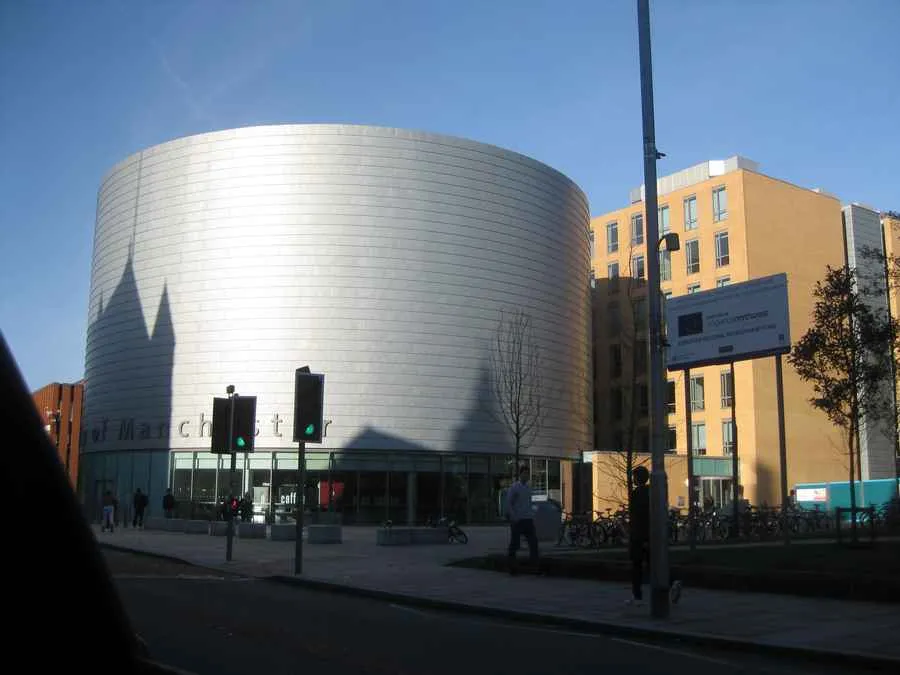 Photo: University of Manchester, via www.e-architect.com
This grassroots quality manifests in programming that would be impossible within more formal institutional frameworks. The Bookish Type in Cardiff recently hosted a reading by asylum seekers whose work had been rejected by established publishers. Lighthouse Books in Edinburgh runs monthly "failure workshops" where writers share and celebrate their rejections. These events create spaces for vulnerability and authentic connection that traditional literary festivals often struggle to achieve.
Architectural Alchemy
The physical transformation of these spaces reflects their evolving function. Traditional bookshop layouts, optimised for browsing and purchasing, prove inadequate for multi-use programming. Innovative shop owners have become spatial alchemists, finding ingenious solutions to accommodate diverse activities within severely constrained footprints.
At New Beacon Books in Finsbury Park, London's oldest Black bookshop, owner Michael La Rose has created a modular environment using vintage library furniture. Shelving units can be repositioned within minutes to create intimate reading circles or larger performance spaces. Folding chairs emerge from hidden storage. A small stage constructed from reclaimed wood can accommodate anything from poetry readings to panel discussions about decolonising literature.
 Photo: New Beacon Books, via images.squarespace-cdn.com
"Every square foot must work harder," La Rose explains, demonstrating how a seemingly fixed bookshelf actually slides along hidden tracks. "We're not just selling books; we're curating experiences, fostering dialogue, building community. The space must be as flexible as our mission."
The Economics of Idealism
Yet this cultural ambition operates within harsh economic realities. Most independent bookshops survive on razor-thin margins, with owners often working second jobs to subsidise their literary passions. The additional programming that defines these new cultural spaces requires significant investment of time and energy, often without corresponding financial return.
"The events rarely pay for themselves," admits Tom Chen, whose shop Radical Reads in Manchester hosts nightly programming ranging from political philosophy discussions to experimental music performances. "But they create the community that sustains the shop. People who attend events become regular customers, advocates, friends. It's a long-term investment in cultural relationships rather than short-term profit."
This economic model challenges conventional retail wisdom but reflects deeper changes in how communities value cultural spaces. Many shops now operate hybrid membership models, where regular customers pay annual fees that help subsidise programming. Others have embraced crowdfunding for specific projects or partnerships with local arts organisations.
Digital Resistance
Paradoxically, these hyper-local, physically grounded spaces often serve as centres of resistance against digital culture's homogenising effects. While online algorithms increasingly determine what books readers discover, independent bookshops offer genuinely serendipitous encounters with unexpected texts and ideas.
"We're curating against the algorithm," argues Sarah Williams, whose shop Strange Attractor in Cambridge specialises in books about hauntology, psychogeography, and other niche academic subjects. "Every book on our shelves has been chosen by a human being who believes it deserves attention. That curatorial voice becomes increasingly valuable as digital recommendation systems flatten cultural discourse."
This curatorial function extends beyond book selection to event programming. Shop owners become cultural editors, identifying emerging voices, facilitating unexpected collaborations, and creating contexts for challenging work to find its audience.
Networks of Resistance
Across Britain, these transformed bookshops increasingly function as nodes in an informal network of cultural resistance. Touring authors and performers move between shops, creating alternative circuits that bypass traditional promotional channels. Small presses use these venues to launch publications that might never reach mainstream bookshops.
The network's power became evident during the pandemic, when many shops pivoted to become community support centres, distributing food parcels alongside books, hosting virtual events that maintained social connections during lockdown. Their role as community anchors proved more essential than their commercial function.
The Future of Literary Culture
As Britain's cultural landscape continues to fragment under economic pressure, these radical bookshops represent something genuinely hopeful: proof that cultural innovation can emerge from constraint, that communities will create the spaces they need when institutions fail to provide them.
"We're writing the future of literary culture one event at a time," reflects Priya Sharma, as she prepares her shop for another evening's programming. "Not because we planned to become cultural centres, but because our communities demanded it. The books brought people together, but the conversations keep them coming back."
In these modest spaces, between the poetry and politics sections, a new model of cultural production is taking shape—one that prioritises access over exclusivity, conversation over consumption, and community over commerce. They represent Britain's literary future in miniature: diverse, resourceful, and stubbornly optimistic about the power of words to change the world.