The Ritual of Listening
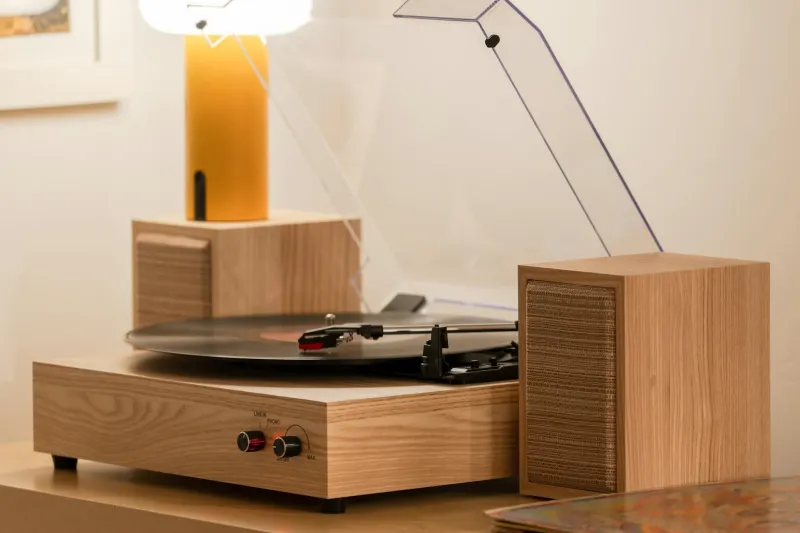
Every Tuesday evening at seven o'clock sharp, David Thornton dims the lights in his Islington basement and places a pristine vinyl record on a turntable that cost more than most people's cars. Around him, eight carefully positioned chairs hold a diverse congregation: a retired BBC sound engineer, a young graphic designer, a classical violinist, and tonight's special guest—a visiting Japanese audiophile who has travelled from Tokyo specifically for this gathering.
For the next three hours, they will listen. Not background listening, not casual appreciation, but the kind of focused, almost meditative attention that treats recorded music as a sacred art form. No conversation during tracks. No mobile phones. Just pure, unadulterated sound reproduction through a system that Thornton has spent fifteen years perfecting.
"People think we're obsessive," he says, adjusting the angle of a speaker by precisely two degrees. "But we're actually trying to be less obsessive—less obsessed with the mechanics of listening and more focused on the music itself. When the system disappears, that's when the magic happens."
The Underground Network
Thornton's gathering is one of dozens of similar listening circles operating across Britain, a hidden network of acoustic perfectionists who have turned their homes into temples of sound reproduction. From converted church halls in Edinburgh to purpose-built listening rooms in Surrey mansions, these spaces represent a quiet counter-revolution against the compressed, convenient, but sonically compromised world of digital streaming.
The movement has its roots in the Japanese concept of the "listening bar"—intimate venues where customers pay to hear music played through exceptional sound systems. But Britain's version has evolved into something more communal, more domestic. These aren't commercial ventures but labour-intensive hobbies that border on obsession, maintained by individuals who view high-fidelity sound reproduction as both craft and calling.
In Glasgow, Margaret Sinclair has transformed her Victorian terrace's front room into what she calls a "sonic sanctuary." The space required eighteen months of acoustic treatment: bass traps in the corners, diffusion panels on the walls, and a floating floor to isolate the room from external vibrations. The result is a space where even the quietest musical details—the creak of a piano bench, the breath before a vocal phrase—emerge with startling clarity.
"It's not about showing off expensive equipment," Sinclair explains, gesturing towards her modest but meticulously chosen components. "It's about creating a space where music can exist as the artist intended. When you hear a recording properly reproduced, it's like meeting the musician for the first time."
The Democracy of Obsession
Contrary to stereotypes about wealthy audiophiles and their six-figure systems, many of Britain's listening rooms operate on surprisingly modest budgets. The emphasis falls on knowledge rather than expenditure—understanding room acoustics, component synergy, and the subtle art of system setup that can make a £500 amplifier outperform equipment costing ten times as much.
Tom Bradley's listening room in a Bradford council flat exemplifies this approach. Working as a night-shift security guard, he has spent five years slowly assembling a system built around vintage components rescued from car boot sales and eBay auctions. His monthly gatherings attract members from across Yorkshire, drawn not by expensive equipment but by Bradley's uncanny ability to extract exceptional sound from humble components.
"The democratisation of good sound is one of our movement's greatest achievements," Bradley argues. "You don't need a trust fund to hear music properly. You need patience, knowledge, and the willingness to listen critically. The most expensive mistake people make is thinking that price equals performance."
This philosophy extends to the music itself. While some gatherings focus on audiophile-approved recordings—typically jazz, classical, and carefully mastered rock albums—others embrace a more eclectic approach. Bradley's group recently spent an evening exploring the sonic qualities of UK grime, discovering unexpected depth and detail in tracks that most people consume through smartphone speakers.
Rituals and Reverence
The ceremony surrounding these gatherings is as important as the technology that enables them. Most groups follow unwritten protocols that would seem almost religious to outsiders: the careful handling of vinyl records, the precise positioning of listening chairs, the respectful silence during playback. These rituals aren't arbitrary but serve to focus attention on the music itself.
At Sarah Chen's monthly gathering in her Hackney warehouse conversion, members follow a tradition borrowed from Japanese tea ceremony: each person brings a single album to share, along with a brief explanation of why they chose it. The evening progresses through these selections, creating unexpected musical journeys that might jump from Miles Davis to Björk to Bach within a single session.
"The sharing aspect is crucial," Chen explains. "This isn't about individual listening pleasure—it's about collective musical discovery. When someone plays a track they love through a really good system, you're not just hearing their music, you're hearing their passion for it."
The Technology of Transcendence
Behind the mystical language and ritualistic behaviour lies genuine technical expertise. Many listening room hosts possess encyclopaedic knowledge of acoustic principles, electrical engineering, and mechanical design. They can discourse knowledgeably on the tonal characteristics of different valve amplifiers, the impact of cable geometry on signal transmission, or the optimal placement of acoustic treatments.
This technical obsession serves a transcendent purpose: the elimination of the reproduction system as a barrier between listener and music. The goal isn't to impress with hi-fi pyrotechnics but to create what audiophiles call "the suspension of disbelief"—moments when the mechanical apparatus disappears entirely, leaving only the direct emotional connection between performer and audience.
James Morrison's purpose-built listening room in his Cotswolds cottage represents the ultimate expression of this philosophy. The octagonal space, designed according to acoustic principles derived from concert hall architecture, cost him three years of weekends and most of his pension. But the results, according to visitors, approach the transcendent. During a recent session featuring a 1960s Blue Note recording, one guest reported feeling as if the musicians were physically present in the room.
"That's what we're chasing," Morrison reflects. "Not perfect sound reproduction, but the perfect illusion of live performance. When you achieve that, even for a moment, it justifies every hour of work, every pound spent."
Digital Heretics and Analogue Purists
The listening room community remains divided on the question of digital sources. While vinyl records dominate most gatherings, a growing minority advocate for high-resolution digital files played through carefully selected DACs and streaming systems. This technological schism reflects broader questions about authenticity, convenience, and the nature of musical experience.
Dr. Rajesh Patel, a Cambridge physicist who hosts bi-weekly digital listening sessions, argues that the medium matters less than the care taken in reproduction: "A well-mastered digital file played through a properly designed system can reveal musical information that's lost on even the finest analogue systems. The key is understanding the strengths and limitations of each format."
His sessions attract younger participants, many of whom grew up with digital music but hunger for the kind of focused listening experience that streaming algorithms cannot provide. For them, the listening room represents not nostalgia for analogue formats but an alternative to the scattered, distracted way that digital technology encourages musical consumption.
The Future of Focused Listening
As Britain's listening room movement grows—aided by online forums, social media groups, and word-of-mouth recommendations—it faces questions about its own future. Can these intimate gatherings maintain their character as they attract larger audiences? How do they balance inclusivity with the technical expertise that makes exceptional sound reproduction possible?
Some hosts have begun offering educational workshops alongside regular listening sessions, teaching newcomers about room acoustics, component selection, and critical listening techniques. Others worry that too much growth might dilute the contemplative atmosphere that makes these gatherings special.
Thornton, whose Tuesday evening sessions now have a waiting list, remains optimistic about the movement's trajectory: "We're not trying to convert everyone into audiophiles. We're just offering an alternative to the way most people experience music today. In a world of compressed files and algorithm-generated playlists, we're preserving the possibility of deep, focused listening."
As the evening's session concludes and members carefully return records to their protective sleeves, the conversation turns to next week's selection. Someone mentions a newly discovered Blue Note reissue; another suggests exploring the spatial qualities of ambient electronic music. The technical discussion that follows—involving speaker placement, room treatment, and optimal listening levels—might seem obsessive to outsiders.
But for these devoted listeners, such details matter precisely because they serve something larger: the preservation of music as a transformative art form rather than mere background entertainment. In their carefully crafted rooms, surrounded by friends who share their passion for sonic excellence, they maintain spaces where music can still surprise, move, and transcend the mechanical limitations of reproduction technology.
The revolution will not be streamed—it will be listened to, with complete attention, in rooms designed for nothing else but the perfect appreciation of sound.