The Weight of Gold Leaf
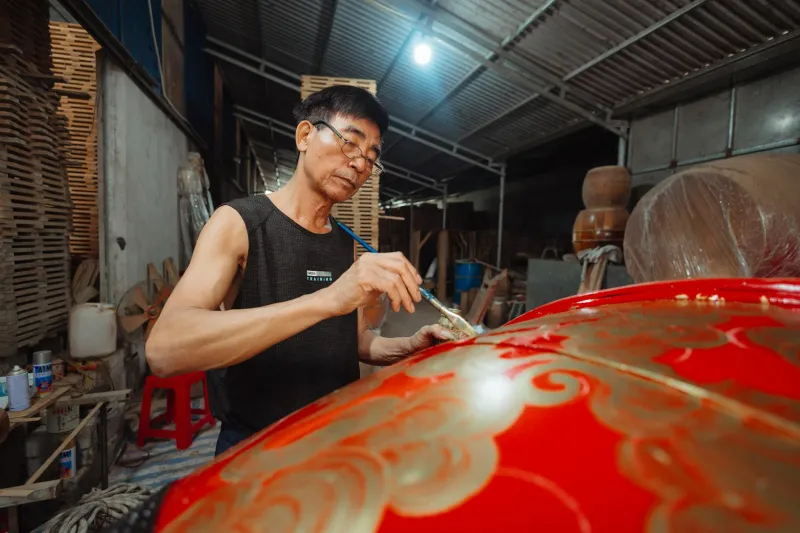
In a converted stable block outside Gloucester, Mary-Ann McCarthy runs her fingers across the intricate scrollwork of a traditional vardo panel, each curve outlined in genuine gold leaf that catches the morning light. The 34-year-old artist, whose Romani heritage stretches back five generations, has spent the past decade mastering the ornate decorative traditions that once adorned the horse-drawn caravans of Britain's travelling communities.
"People see the gold and think it's all flash and show," she explains, loading her finest sable brush with vermillion. "But every symbol, every colour combination has meaning. The roses represent family bonds, the scrollwork maps our journeys. This isn't decoration—it's our written history."
McCarthy is part of a quietly revolutionary movement of artists with Romani and Traveller heritage who are reclaiming visual traditions that mainstream culture has either romanticised beyond recognition or dismissed entirely. From the elaborate copperwork of traditional kettles and water vessels to the intricate geometric patterns of appliqué textiles, these craftspeople are breathing contemporary life into practices that stretch back centuries.
Beyond the Stereotypes
The challenge facing these artists extends far beyond technical mastery. For generations, Romani visual culture has been filtered through the lens of outsider fascination—think of the saccharine caravan imagery on biscuit tins or the appropriated "gypsy style" of high-street fashion. Meanwhile, the genuine complexity and meaning embedded within traditional crafts remained largely invisible to wider society.
"We're fighting on two fronts," explains James Burton, a 29-year-old metalworker whose family has been crafting copper vessels for four generations. "On one side, you have people who want us to stay frozen in time, performing some idealised version of what they think Romani culture should look like. On the other, there's complete ignorance about the sophistication of our artistic traditions."
Burton's workshop in Birmingham showcases the evolution he's describing. Alongside traditional water jugs with their characteristic hammered finish and ornate handles, contemporary pieces explore new forms—sculptural vessels that maintain traditional proportions whilst incorporating modern materials and techniques. Each piece bears the subtle marks that identify it as Burton's work, continuing a practice of individual artistic signatures that predates most European craft traditions.
The Language of Colour
Perhaps nowhere is this tension between preservation and innovation more evident than in the revival of vardo painting. The traditional colour palette—deep reds, forest greens, royal blues, and that distinctive gold—wasn't chosen arbitrarily. Each hue carried specific meanings within Romani culture, creating a visual language that could communicate family histories, trade specialisations, and regional origins to those who knew how to read the signs.
Sarah Lee, whose grandmother was one of the last traditional vardo painters working in the 1970s, has spent years documenting these colour codes and their regional variations. Her contemporary work maintains the symbolic framework whilst expanding the visual vocabulary.
"I'm not trying to recreate museum pieces," she says, gesturing towards a series of panels that incorporate traditional motifs with distinctly modern geometric elements. "Culture lives and breathes, or it dies. My grandmother would understand what I'm doing here—she'd probably have thoughts about my colour choices, mind you."
Digital Preservation, Physical Practice
The revival has been aided by an unexpected ally: social media. Platforms like Instagram have allowed scattered communities to share techniques, compare regional variations, and connect young people with elder craftspeople who might otherwise remain isolated. The hashtag #RomaniCraft has become a repository of traditional knowledge, with detailed process videos showing everything from the preparation of traditional pigments to the precise brush techniques required for fine scrollwork.
Yet this digital connection serves to strengthen rather than replace physical practice. Monthly workshops in community centres from Cardiff to Newcastle bring together artists at various skill levels, with experienced craftspeople passing on techniques that were traditionally learned within family units.
"The internet helps us find each other," explains McCarthy, "but you can't learn the weight of gold leaf through a screen. You need to feel how the brush moves, understand how the paint flows. That knowledge lives in your hands."
Contemporary Contexts
The most exciting developments are emerging where traditional techniques meet contemporary artistic contexts. Several galleries have begun showcasing work by Romani artists, though not without controversy. Some community members question whether removing these objects from their cultural context diminishes their meaning, whilst others argue that gallery representation is essential for broader cultural recognition.
Burton's recent exhibition at Birmingham's Ikon Gallery sparked particular debate. His installation featured dozens of traditional copper vessels arranged in a precise grid, each piece slightly different yet clearly part of a cohesive whole. The work simultaneously celebrated the individual artisan's skill whilst highlighting the systematic marginalisation of Romani culture.
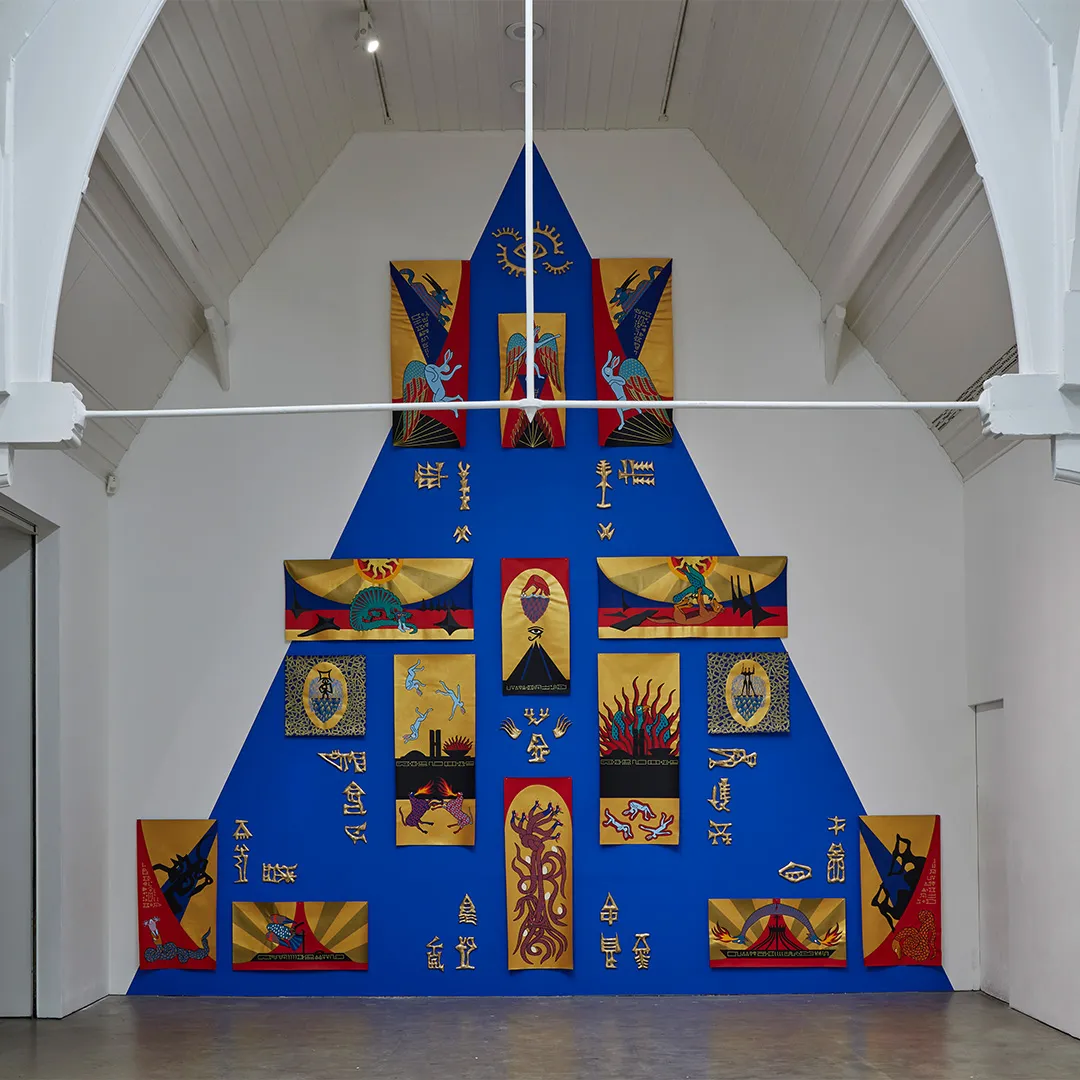 Photo: Ikon Gallery, via www.brindleyplace.com
"Every piece in that room represents hours of skilled labour," he reflects. "But more than that, each one carries forward traditions that people tried to erase. That's not just craft—that's resistance."
The Next Generation
As these artists gain recognition, they face the delicate task of maintaining cultural authenticity whilst engaging with broader artistic conversations. The solution, it seems, lies not in choosing between tradition and innovation, but in understanding tradition as inherently innovative—a living practice that has always adapted to changing circumstances whilst maintaining its essential character.
McCarthy's latest commission exemplifies this approach. Working with a housing association in Manchester, she's creating a series of murals that incorporate traditional vardo motifs within contemporary urban contexts. The project has drawn criticism from some quarters—both from those who consider it commercialisation and those who question the appropriateness of permanent installations of traditionally mobile art forms.
"Culture isn't a museum piece," she responds. "Our ancestors painted their homes because they took pride in beauty, because they wanted to create something meaningful. That impulse doesn't stop being valid because the home happens to be a council flat instead of a caravan."
As Britain grapples with questions of cultural identity and belonging, these artists offer a compelling model: heritage as living practice, tradition as creative foundation rather than creative limitation. Their work suggests that the most authentic cultural preservation might not involve freezing practices in amber, but allowing them to grow and change whilst maintaining their essential spirit.
In McCarthy's workshop, the morning light has shifted, casting new shadows across the painted panels. The gold leaf still gleams, but now it catches reflections from contemporary tools, LED lights, and the mobile phone where she documents each stage of her process. The continuity isn't in the unchanged repetition of old forms, but in the persistence of the impulse to create beauty, meaning, and connection through skilled hands and patient craft.