The Last Frame Painters
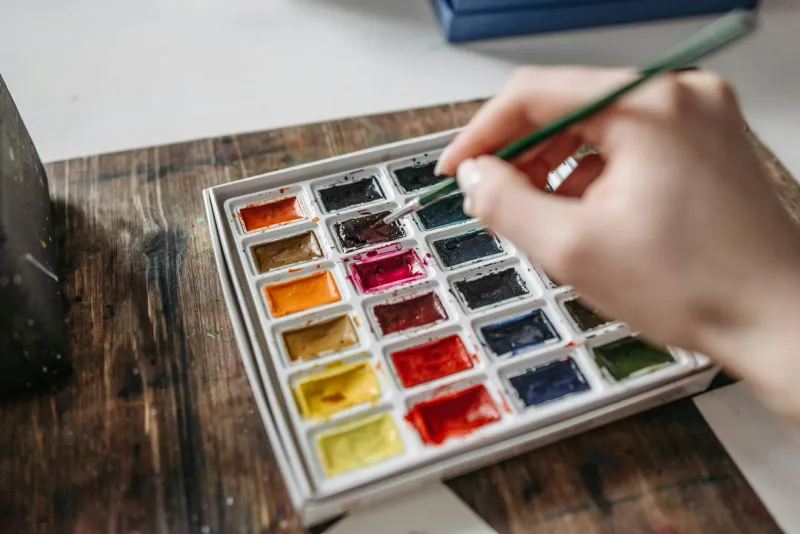
In a converted Victorian warehouse in Hackney, animator Priya Sharma holds up a single cel—a transparent sheet bearing the hand-painted image of a falling leaf, one of 1,440 frames that will comprise a minute of finished animation. The leaf, rendered in watercolour with deliberate imperfection, trembles slightly with the evidence of human touch. In an industry racing towards algorithmic efficiency, Sharma's painstaking process represents something approaching heresy.
 Photo: Priya Sharma, via lookaside.instagram.com
"Every frame carries the maker's breath," she explains, adjusting the cel against a hand-painted background of autumn trees. "When you watch traditional animation, you're seeing thousands of individual human decisions. AI can simulate that, but it can't replicate the consciousness behind each mark."
Sharma belongs to a small but growing movement of British animators who have deliberately turned away from digital automation, embracing techniques that predate computer graphics by decades. Their work appears in short films screened at festivals from Edinburgh to Annecy, in music videos for independent bands, and increasingly in commercial projects where clients specifically seek the textures and imperfections that only hand-drawn animation can provide.
The Texture of Time
This revival of traditional animation techniques emerges at a moment when artificial intelligence promises to automate creativity itself. As machine learning algorithms generate increasingly sophisticated moving images, these artists position their laborious craft as a form of cultural resistance—proof that some forms of beauty can only emerge from human struggle and imperfection.
At the Royal College of Art's animation department, where several movement pioneers studied, professor Angela Morrison observes a marked shift in student interests over the past five years. "We're seeing young animators deliberately choose the most time-intensive techniques available," she notes. "They understand that in a world of instant generation, the slow-made carries special meaning."
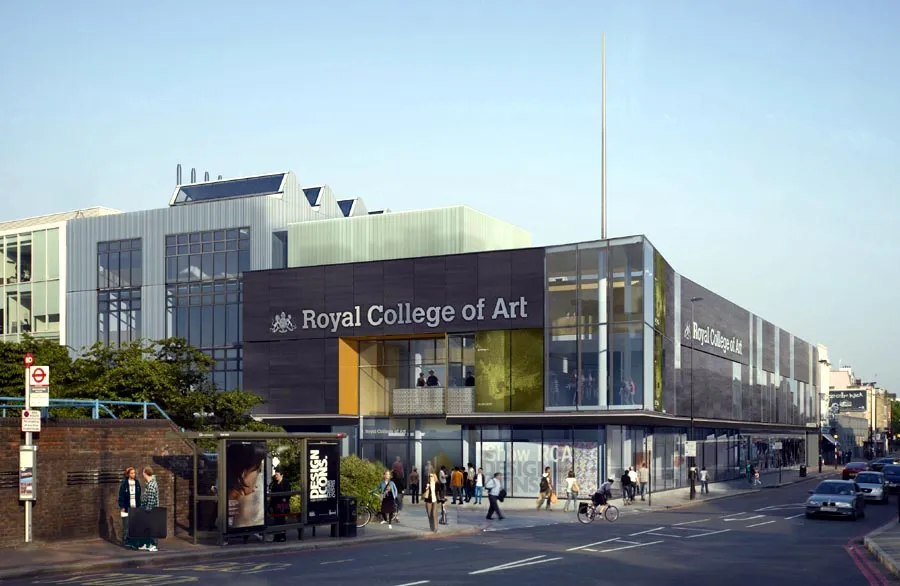 Photo: Royal College of Art, via www.e-architect.com
This temporal dimension proves crucial to understanding the movement's cultural significance. Where digital animation can be endlessly refined and perfected, hand-drawn techniques embed time itself into their visual texture. The slight tremor of a hand-painted line, the grain of paper showing through watercolour washes, the inevitable variations between sequential frames—these "flaws" become signatures of human presence.
The Cut-Paper Revolutionaries
Beyond traditional cel animation, Britain's hand-drawn revival encompasses diverse techniques united by their rejection of digital convenience. In Glasgow, animator Marcus Reid creates elaborate cut-paper sequences, building entire worlds from coloured card and stop-motion photography. His recent short film, "The Shipbuilders," required over 3,000 individual photographs to capture five minutes of movement.
"Digital animation offers infinite possibilities," Reid explains, carefully positioning a paper figure against a miniature Clydeside landscape. "But infinite possibility can be paralysing. When you're working with physical materials, every choice has consequences. You can't undo with a keystroke—you have to live with your decisions."
This embrace of consequence and permanence attracts animators frustrated with digital culture's endless revisability. Reid's workshop, filled with craft knives, coloured paper, and vintage animation cameras, resembles a pre-digital design studio more than a contemporary animation facility. Yet his finished films, distributed through Vimeo and festival screenings, find eager audiences seeking alternatives to algorithmic smoothness.
The aesthetic that emerges from these constraints carries distinctive visual characteristics—the subtle shadows cast by layered paper, the slight registration shifts inevitable in hand-operated cameras, the organic irregularities that resist digital perfection. These qualities, once considered technical limitations, now function as stylistic signatures that immediately distinguish hand-made animation from its digital counterparts.
The Sound of Silence
Interestingly, many of Britain's hand-drawn animators work closely with experimental musicians and sound artists, creating audiovisual collaborations that emphasise texture and imperfection in both visual and sonic domains. This cross-pollination between animation and sound art reflects shared values around craft, process, and resistance to digital homogenisation.
London-based animator Sarah Chen frequently collaborates with the label Bedroom Community, creating hand-painted films for ambient and electroacoustic compositions. Her animation for composer Ólafur Arnalds featured over 2,000 individual watercolour paintings, each responding to specific moments in the musical score.
"The music itself is made from imperfect instruments—prepared pianos, found sounds, analogue synthesisers," Chen explains. "My animation tries to match that textural honesty. When you see paint bleeding into paper grain, you're experiencing the same kind of beautiful imperfection as a slightly detuned string."
These collaborations often result in works that blur boundaries between music video, art film, and experimental documentary. They find audiences through online platforms, but increasingly through live performances where the hand-drawn visuals accompany musical performances in galleries, churches, and unconventional venues.
The Festival Circuit
Britain's hand-drawn animation revival has found its primary audience through the international festival circuit, where programmers increasingly seek alternatives to commercial animation's digital uniformity. From the London Animation Club's monthly screenings to major festivals like Encounters in Bristol, hand-drawn work receives programming priority that reflects curatorial hunger for authentic craft.
"Audiences can immediately sense the difference," explains Encounters festival director Rich Warren. "There's something about hand-drawn animation that demands attention in ways that digital work often doesn't. You're watching someone's labour made visible—that creates a different relationship with the viewer."
This festival success has begun translating into commercial opportunities, as brands and broadcasters recognise the distinctive appeal of hand-made animation. Recent projects include title sequences for BBC programmes, advertising campaigns for craft brands, and music videos for artists seeking to distinguish themselves from digital conformity.
The Teaching of Touch
Perhaps most significantly, the hand-drawn revival is generating new educational initiatives designed to preserve and transmit traditional animation techniques. Workshops in cel painting, paper cut-out animation, and hand-drawn timing proliferate across Britain, often taught by animators who learned these skills from industry veterans before digital transition.
At London's Animation Workshop, founded by former Disney animator Robert Mills, weekend courses in traditional techniques regularly sell out months in advance. Students range from professional animators seeking new skills to complete beginners attracted by the promise of creating something entirely by hand.
"We're not training people for jobs that don't exist anymore," Mills clarifies. "We're teaching ways of seeing and thinking that digital tools can't replicate. Once you understand how movement works frame by frame, you bring that knowledge to any medium."
This educational dimension ensures the movement's longevity beyond current fashion cycles. As new generations discover the particular satisfactions of hand-drawn animation, they adapt traditional techniques for contemporary concerns and technologies, creating hybrid approaches that honour craft traditions whilst addressing current cultural needs.
The Democracy of Difficulty
Ultimately, Britain's hand-drawn animation revival represents more than aesthetic preference—it embodies a philosophical position about creativity, labour, and human agency in an increasingly automated world. By choosing the most difficult available techniques, these animators assert the irreducible value of human struggle and imperfection.
As Priya Sharma completes another day's work in her Hackney studio—perhaps twenty finished frames from eight hours of painting—she reflects on the broader implications of her practice. "AI can generate a thousand frames in seconds," she acknowledges. "But it can't experience the meditation of repetitive mark-making, the surprise when paint behaves unexpectedly, the satisfaction of solving problems through physical manipulation."
In her careful frames, each bearing the evidence of human attention and intention, Britain's hand-drawn animation revival finds its deepest justification—not as rejection of technological progress, but as preservation of irreplaceable forms of human expression. Against the algorithm's efficiency, they offer the inefficient beauty of the handmade, one frame at a time.